 Morning – Arrival at Baltra Airport: Your TCC (Transit Control Card), also known as the Ingala card (US$20 per person), will be issued digitally after you complete an online form. At the airport, this digital card will be checked, and your luggage will be inspected to ensure that no non-native plant or animal species are introduced. In addition, the Galápagos National Park entrance fee (US$200) must be paid upon arrival if it has not already been paid. Your guide will meet you at the airport, assist you with your luggage, and accompany you on the short bus ride to the harbor. There you will board the yacht. After being welcomed by the crew and captain, your cabins will be assigned.
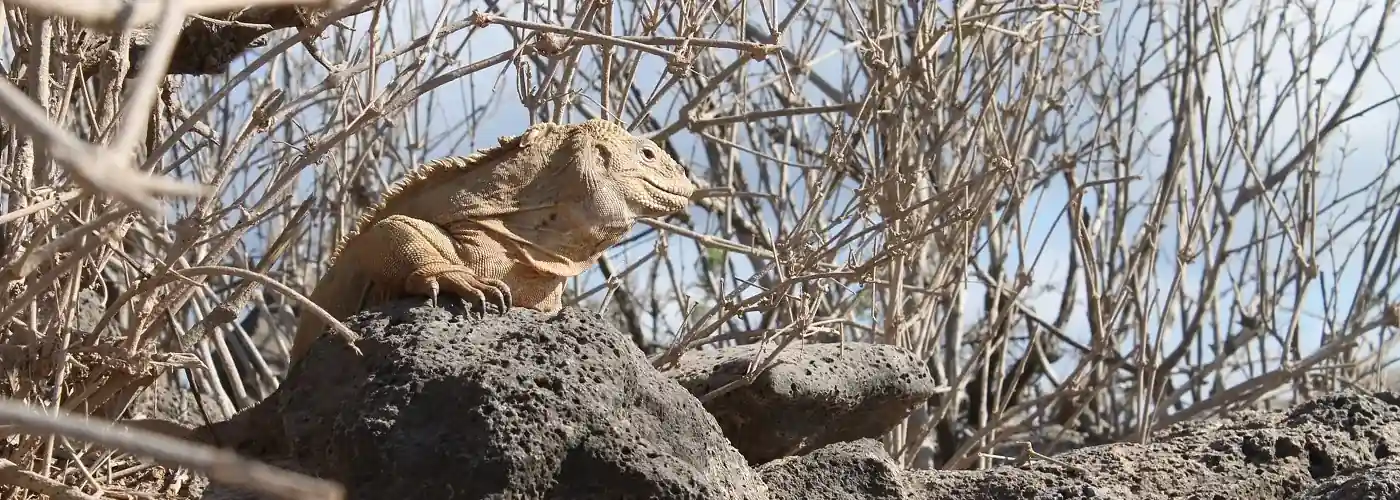
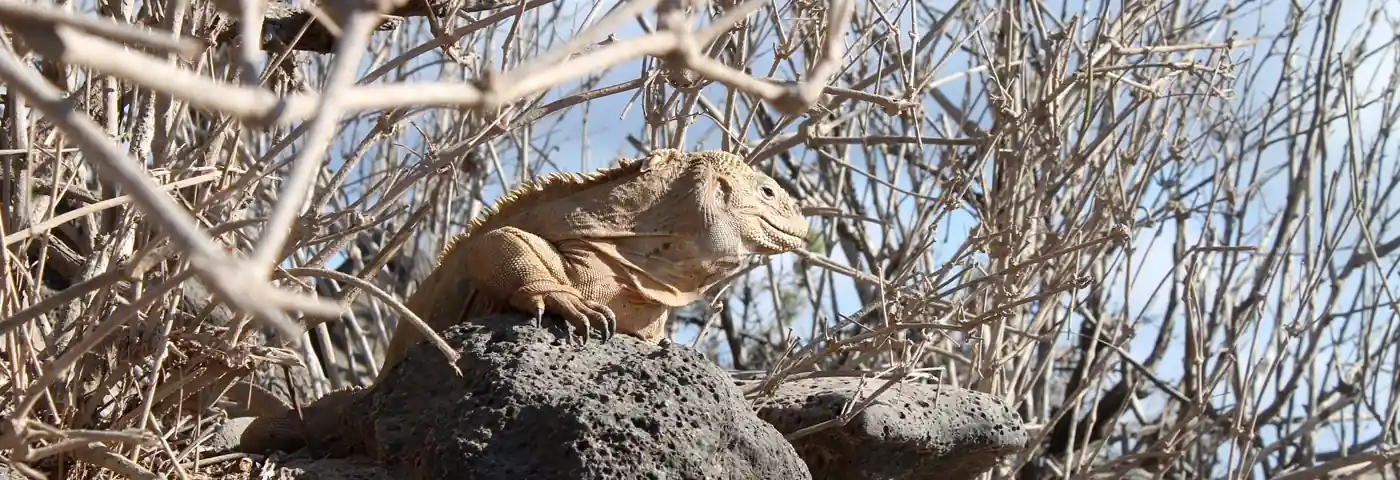
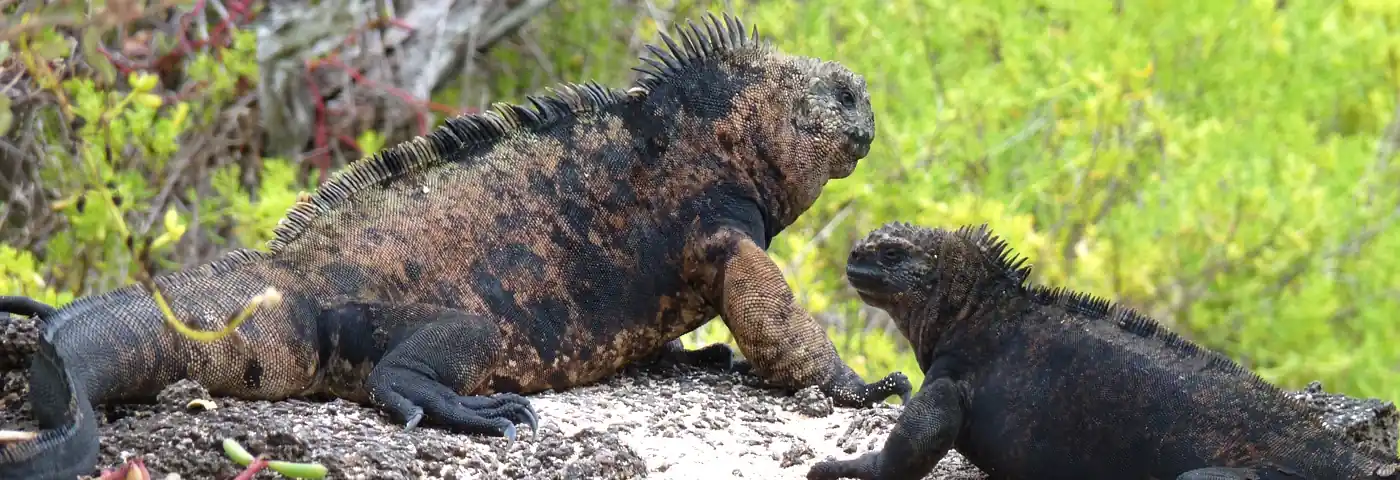
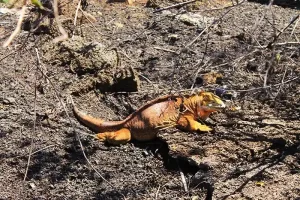
Afternoon – Dragon Hill: At Dragon Hill, there are two main species that are very likely to be seen during any visit to the Galápagos Islands, although they are not widely distributed across the islands: the Galápagos land iguanas and the American flamingos. You will climb a hill with giant Opuntia cacti, where these “dragons” feed and nest.
The short trail crosses the coastal vegetation zone as well as the slightly higher arid zone with endangered tropical dry forest. During the warm and wet season in the first half of the year, everything turns green.
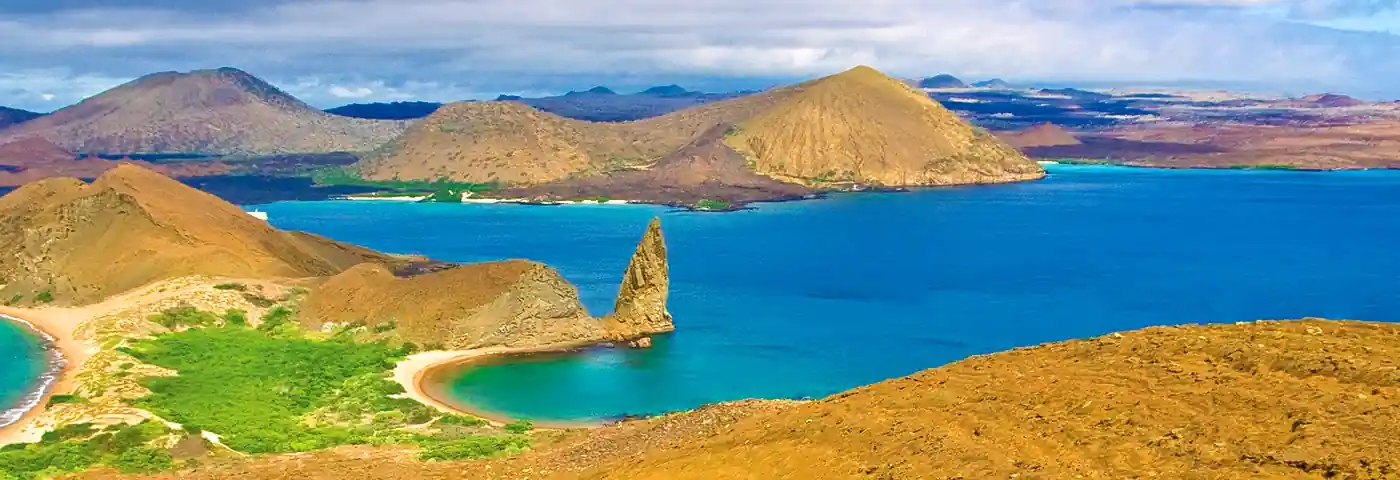
Evergreen giant opuntias with internal water storage have adopted a different survival strategy in this dry climate compared to the deciduous palo santo trees; in the end, both were successful. This is also a very photogenic site, with breathtaking panoramic views over the bay and a fascinating, steep volcanic tuff cone of red lava rising above the area. Dragon Hill is known for its saline lagoons behind the beach; these contain algae and shrimp and seasonally attract American flamingos. Dragon Hill is the best place on Santa Cruz to observe them.
 Morning – Buccaneer Cove, Espumilla Beach: After breakfast, you will explore the coastline along the impressive cliffs of Buccaneer Cove while learning about the history of the region. This bay is home to a large number of seabirds, sea lions, and intertidal creatures. You will also be able to admire fantastic geological formations such as “Elephant Rock” and “The Bishop,” as well as an impressive natural cave. Here you will have the opportunity to snorkel, take a dinghy ride, or go out in a glass-bottom boat.
Espumilla Beach is a visitor site at the northern end of James Bay, on the west coast of Santiago. Behind the beach lie two hidden, picturesque lakes.
The beach is an important nesting site for turtles, which return year after year to bury their eggs in the cinnamon-colored sand dunes. As you climb a hill, you will be rewarded with a beautiful view of the transition from sea to beach, to mangroves, and on to the palo santo forest.
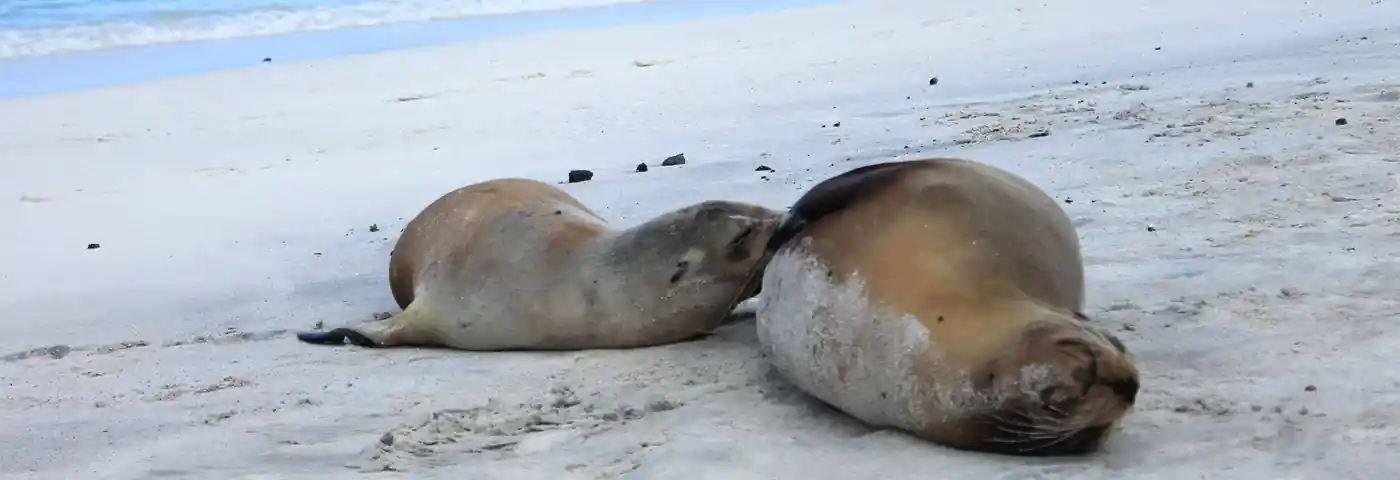
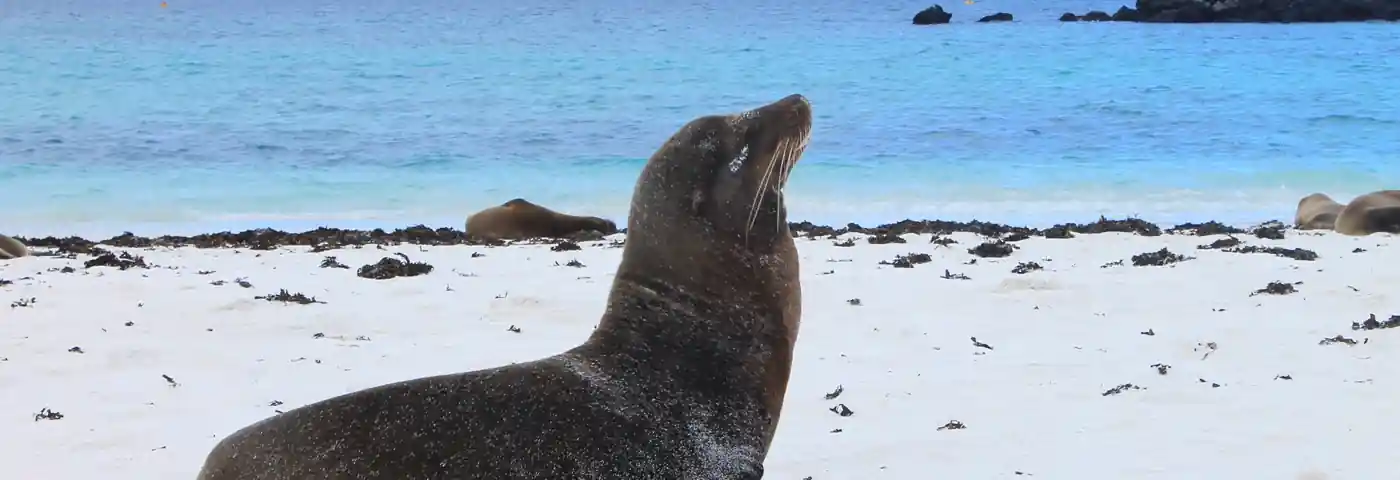
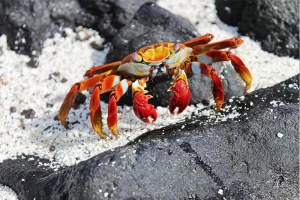
Afternoon – Puerto Egas: At midday, you will navigate south to Puerto Egas, which is famous for its fur seal grottos, where you will take a special guided walk along the coast. The masterfully shaped coastline with black basalt and multicolored ash layers creates a photogenic backdrop with collapsed lava tunnels, natural arches, caves, and holes such as “Darwin’s Toilet.” In a grotto directly beneath a spectacular stone arch at the end of the beach, a colony of sea lions gathers in the shade. Hundreds of red cliff crabs glow bright orange on the pitch-black rocks.
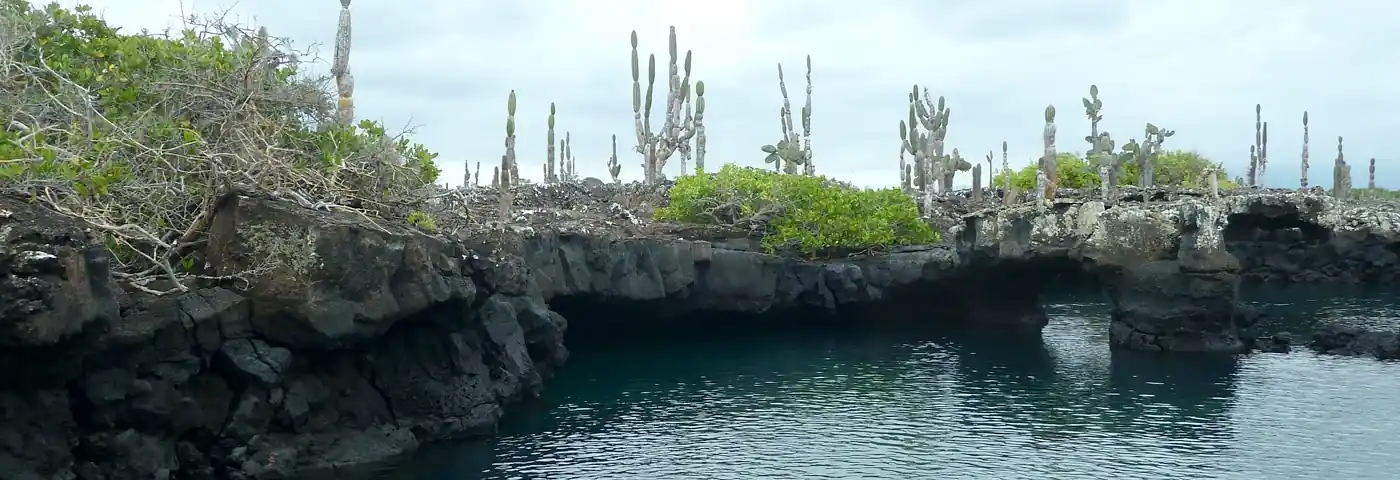
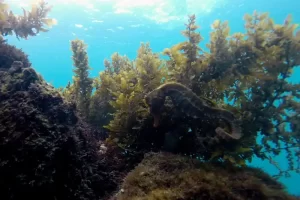 Morning – Vicente Roca Point (Isabela): You will travel to Vicente Roca Point, located at the mouth of the seahorse-shaped island of Isabela. As you enter a dark cave beneath a spectacular arch, you will be accompanied by the echoes of the waves. Just around the corner, the collapsed amphitheater of the Ecuador Volcano offers another impressive view. The calm waters of the bay are well protected from ocean waves. The water is quite cold, but it is an excellent place for snorkeling among various species of sharks, penguins, pufferfish, and seahorses.
Afternoon – Espinoza Point (Fernandina): Espinoza Point is the only visitor site on land on Fernandina Island and one of the few places where you can find some bizarre outcomes of natural selection. The highlight is the flightless cormorant, which lives exclusively on the remote western side of the Galápagos Islands and represents a kind of Holy Grail of evolution. You will also love the almost otherworldly view of the cone of La Cumbre Volcano with its spectacular backdrop. The narrow spit of land you walk along is the end of a lava tongue that reached the coast and solidified upon contact with the cold seawater.
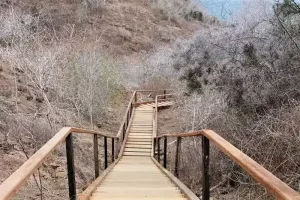 Morning – Urbina Bay (Isabela): Urbina Bay is located on the west coast of Isabela, between Elizabeth Bay and Tagus Cove. It lies near the base of Alcedo Volcano. The coastline experienced a major uplift in 1954, extending the shoreline by over a kilometer. Here you will find corals, shells, and many other calcareous organisms above water. Urbina Bay is home to large and colorful land iguanas and giant tortoises from the Alcedo Volcano population. Many Darwin’s finches can also be seen here.
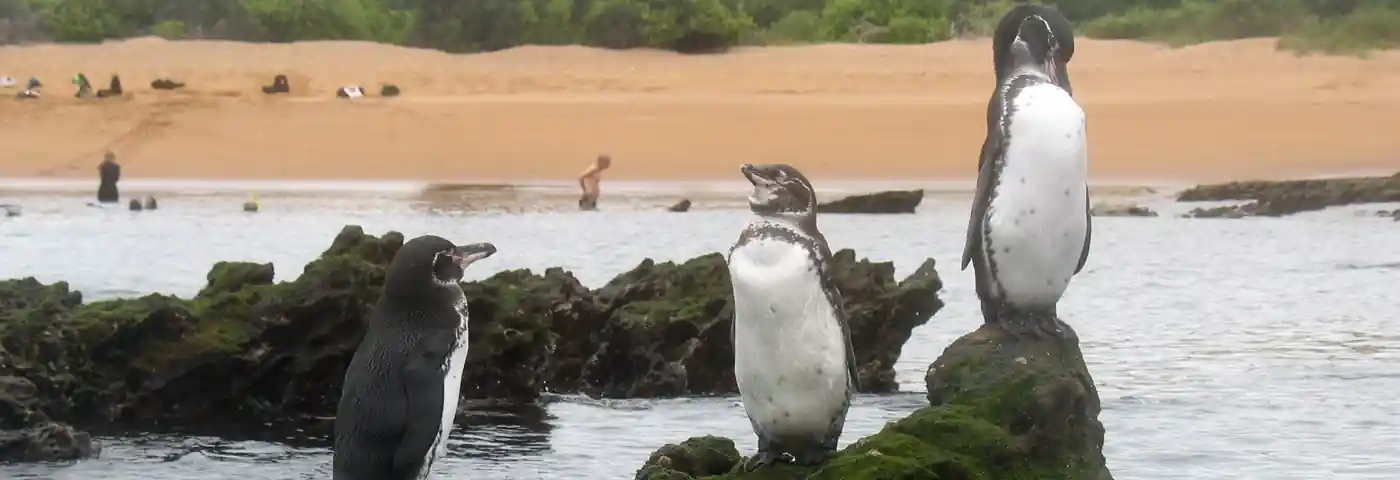
Afternoon – Tagus Cove (Isabela): You will navigate along the cliffs of Tagus Cove. From the dinghy, you have a good chance of seeing Galápagos penguins, flightless cormorants, and other seabirds. From the landing site, it is about a 30-minute walk to the top of the cliff, from where you can see Darwin Lake. The lake contains more salt than the sea itself. From here, you can also see several volcanoes. Look out for the graffiti on the surrounding cliffs of the bay—they were left by pirates and whalers in past centuries.
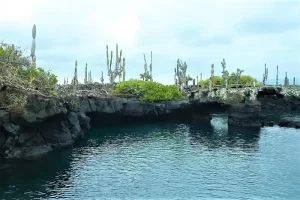 Morning – Elizabeth Bay: Elizabeth Bay can only be visited from the water. Passing the Marielas Islets, which host the largest penguin colony in the Galápagos Islands, you will enter the bay. Here you can admire the red mangroves, their red roots, and green leaves. Sea turtles, cormorants, spotted eagle rays, golden rays, brown pelicans, and sea lions can be observed here.
Afternoon – Moreno Point: Punta Moreno is located on the north coast of Isabela Island between the Sierra Negra and Cerro Azul volcanoes. The trail leads across an extensive pahoehoe lava flow to a complex of coastal lagoons, whose main attractions are various species of birds.
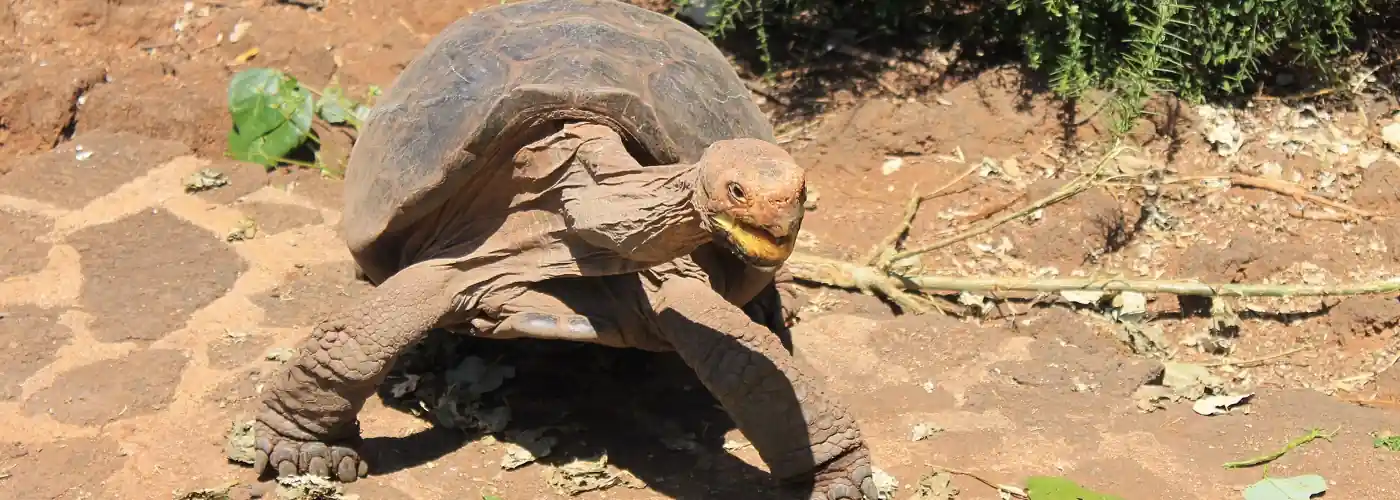
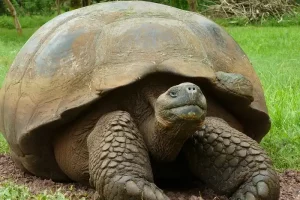 Morning – Charles Darwin Station: After breakfast, dinghies will take you to the tourist dock of Puerto Ayora, from where you will continue to the Charles Darwin Research Station. Biological research and essential conservation work for the unique island group are carried out here. The complex houses the interpretation and information center of the National Park and the Galápagos Marine Reserve. The most memorable part of your visit will likely be the successful breeding center and the encounter with the Galápagos giant tortoises. Before lunch, you will still have some time to explore the area.
Afternoon – Highlands (Santa Cruz): In the highlands of Santa Cruz, you can observe various bird species such as small and large tree finches, ground finches, Galápagos flycatchers, and cattle egrets (often seen standing on the backs of tortoises). During the drive into the island’s protected area, you will see the contrasts of this diverse ecosystem. The road leads from the coast through agricultural land directly into dense humid forests. You can often see Galápagos giant tortoises right on the road or wandering across pastures and through the grass. This place is a paradise for ornithologists, as almost all birds either live on the island or pass through it.
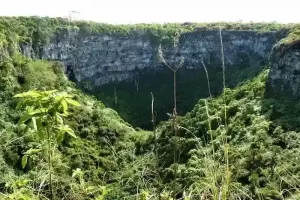 Morning – Twin Craters: The Cráteres Gemelos (Twin Craters) are located on both sides of the road leading to Puerto Ayora. These impressive formations are not actually volcanic craters but were formed by magma domes that hardened on the outside while the lava inside continued to flow, leaving behind large empty magma chambers that eventually collapsed, creating two large holes. The craters are situated in the middle of a lush Scalesia cloud forest, a highland plant species endemic to the Galápagos Islands. This area is also home to the woodpecker finch, which uses tools to obtain food. There is also a chance to see the “pájaro brujo” (vermilion flycatcher), a small bird with a bright red chest.
In the afternoon, you will be transferred to the airport on Baltra Island and fly back to the mainland.