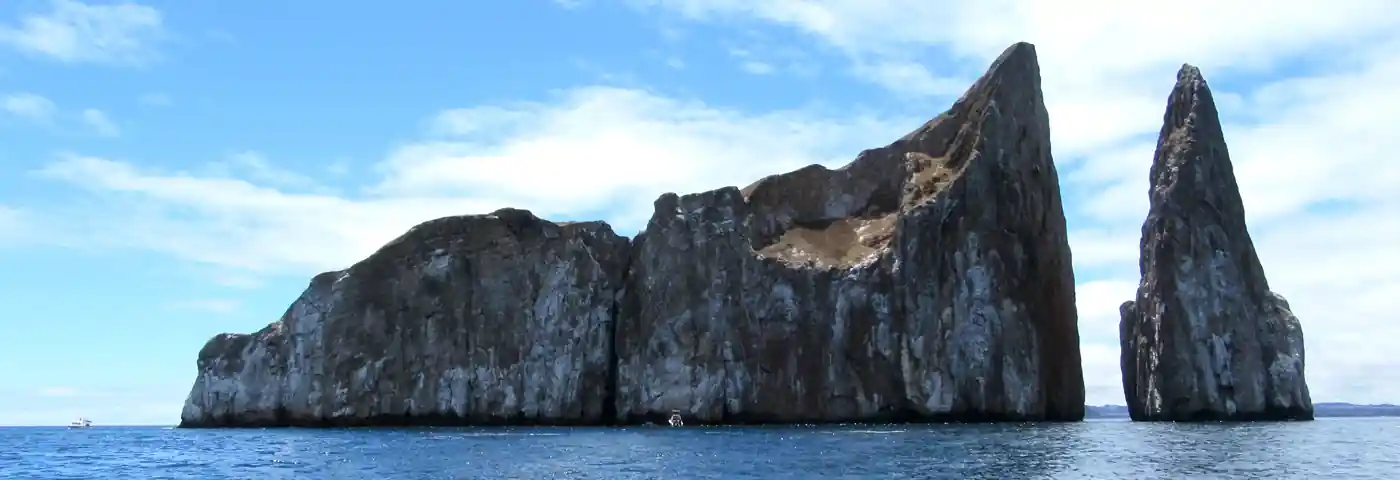
 Morning – Arrival at San Cristóbal Airport:
Your TCC (Transit Control Card), also known as the Ingala card (US$20 per person), will be issued digitally after you complete an online form. At the airport, this digital card will be checked, and your luggage will be inspected to ensure that no non-native plant or animal species are introduced. In addition, the Galápagos National Park entrance fee (US$200) must be paid upon arrival if it has not already been paid. Your guide will welcome you at the airport, assist you with your luggage, and accompany you to the vessel.
After a welcome from the crew and captain, your cabin will be assigned, followed by your first lunch on board.
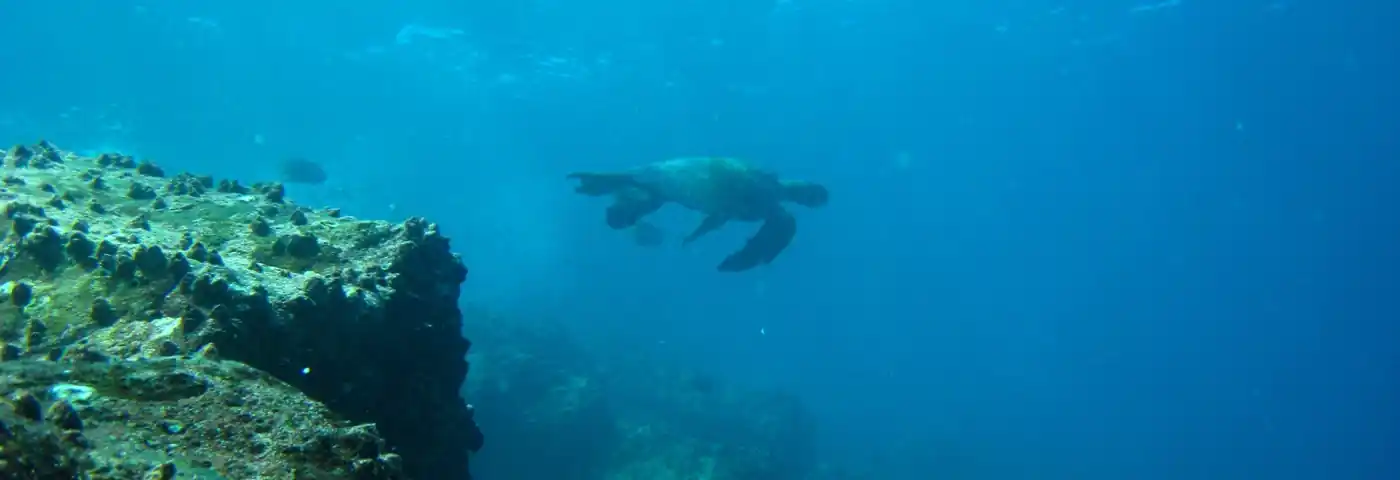
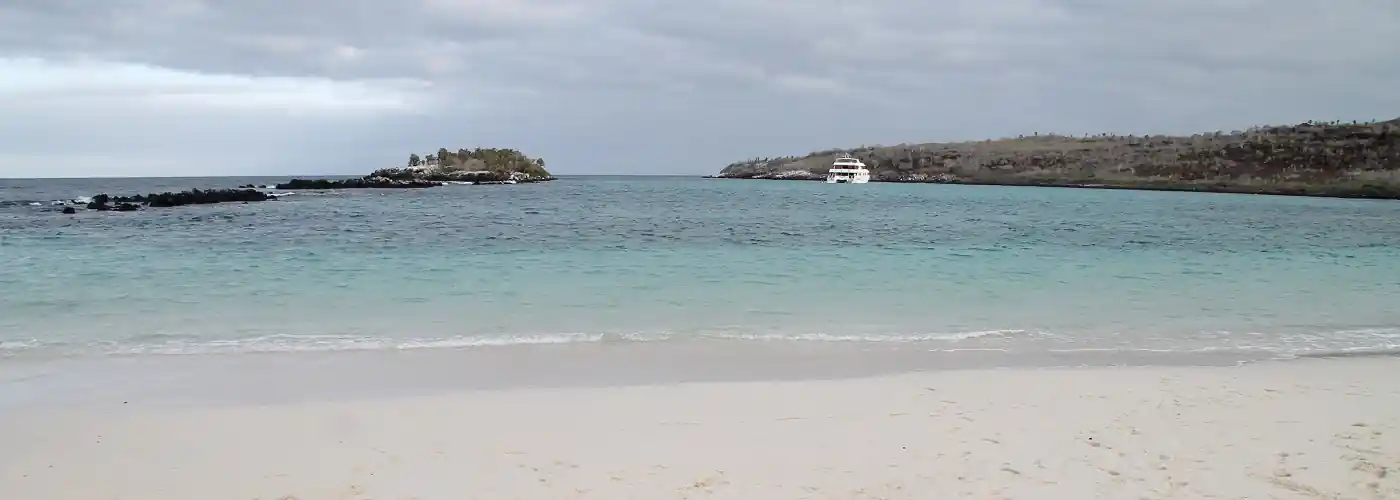
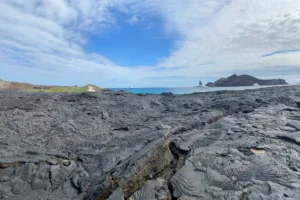
Afternoon – Sullivan Bay: Arriving at Sullivan Bay feels like landing on the moon. The vast, barren lava fields appear almost lifeless, yet this island, especially popular with photographers, still offers plenty to discover. There is even life here: green sea turtles nest on the small white sand beach, where crabs, blue herons, and oystercatchers can also be seen.
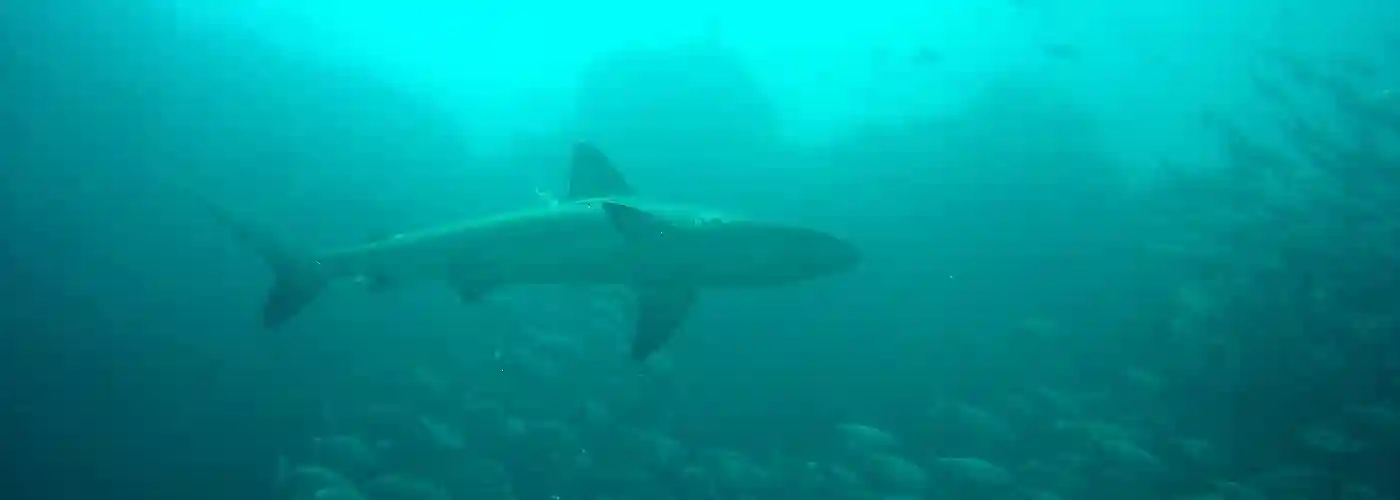
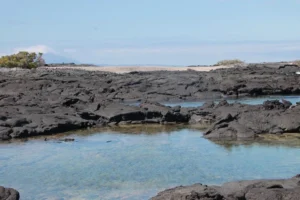 Morning – Vicente Roca Point (Isabela): You will sail to Vicente Roca Point, located at the mouth of the seahorse-shaped Isabela Island. As you enter a dark cave beneath a spectacular arch, the echoes of the waves will accompany you. Around the corner, the collapsed amphitheater of Ecuador Volcano provides another breathtaking view. The calm waters of the bay are well protected from ocean swells. Although the water is quite cold, it is an excellent snorkeling site where sharks, penguins, pufferfish, and seahorses can often be observed.
Afternoon – Espinoza Point (Fernandina): Espinoza Point is the only visitor site on Fernandina Island and one of the few places where you can observe extraordinary examples of natural selection. The highlight is the flightless cormorant, found exclusively on the remote western side of the Galápagos Islands and considered a true evolutionary treasure. You will also enjoy the almost otherworldly view of La Cumbre Volcano and its dramatic landscape. The narrow lava tongue you walk along was formed when molten lava reached the coastline and solidified upon contact with the cold seawater.
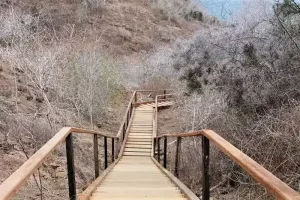 Morning – Tagus Cove: You will navigate along the cliffs of Tagus Cove. From the dinghy, you may spot Galápagos penguins, flightless cormorants, and other seabirds. From the landing site, a 30-minute walk leads to the cliff top overlooking Darwin Lake, whose waters are saltier than the ocean itself. Several volcanoes can also be seen from here. Look out for the graffiti carved into the surrounding cliffs by pirates and whalers centuries ago.
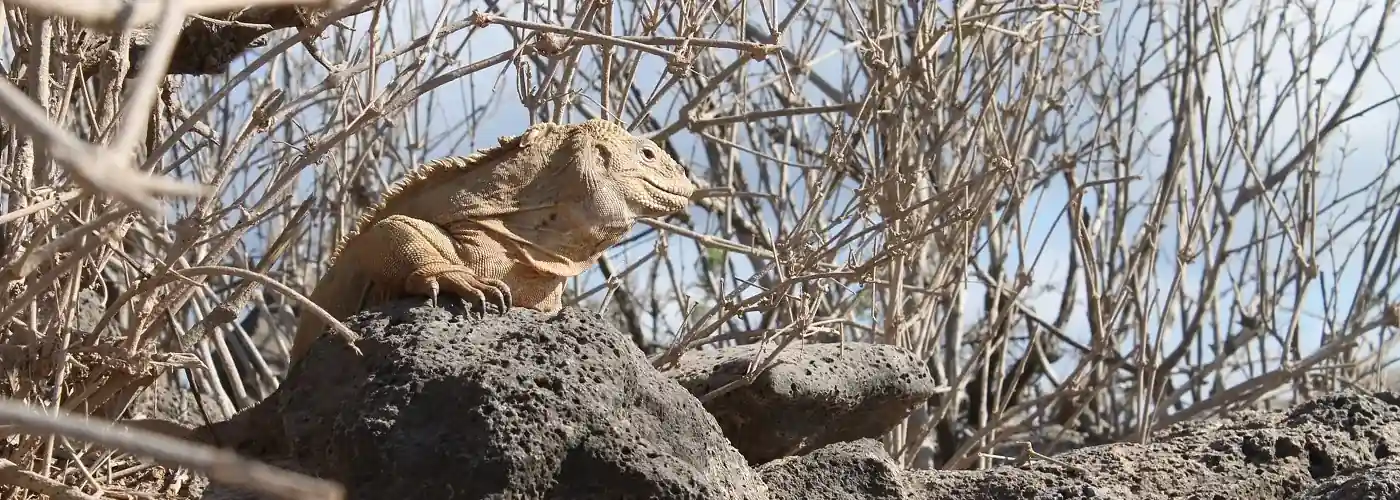
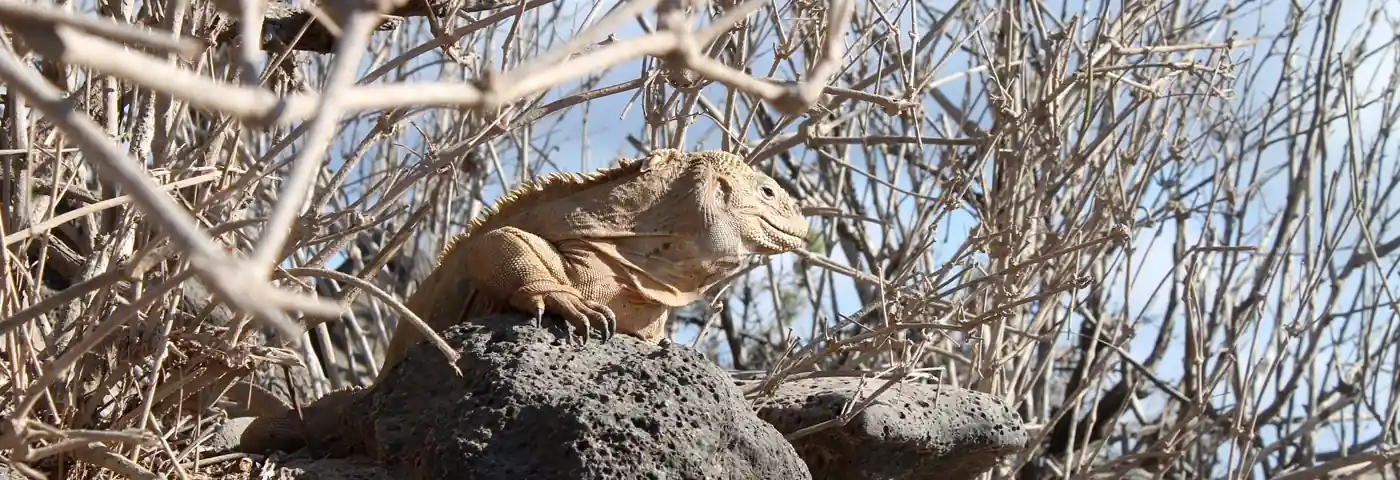
Afternoon – Urbina Bay: Urbina Bay lies on the western coast of Isabela Island, between Elizabeth Bay and Tagus Cove near the base of Alcedo Volcano. In 1954, the coastline experienced a dramatic uplift, extending the shore by more than a kilometer. Here you can observe corals, shells, and other calcareous marine organisms exposed above sea level. Urbina Bay is home to colorful land iguanas and giant tortoises from the Alcedo Volcano population, as well as many Darwin finches.
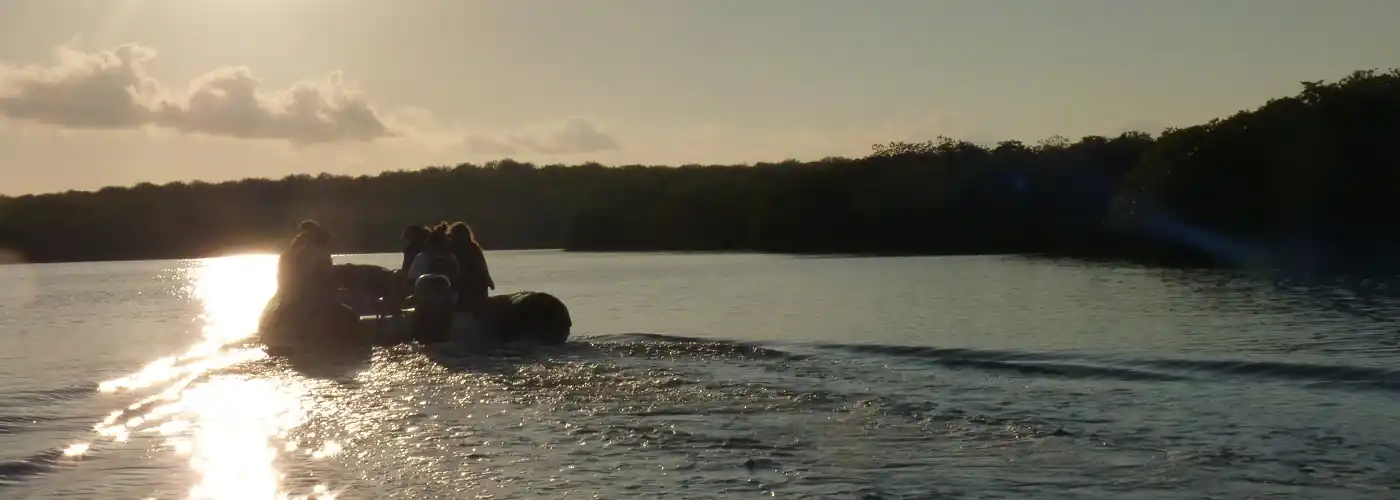
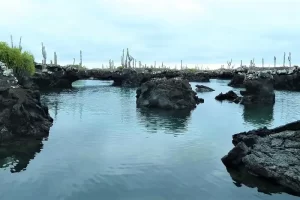 Morning – Elizabeth Bay: Elizabeth Bay can only be visited by water. Passing the Marielas Islets, home to the largest penguin colony in the Galápagos, you will enter the bay surrounded by red mangroves with striking red roots and green leaves. Sea turtles, cormorants, spotted eagle rays, golden rays, brown pelicans, and sea lions can often be seen here.
Afternoon – Moreno Point: Moreno Point is located on the northern coast of Isabela Island between Sierra Negra and Cerro Azul volcanoes. The trail follows ancient pahoehoe lava flows to a complex of coastal lagoons that attract a variety of bird species.
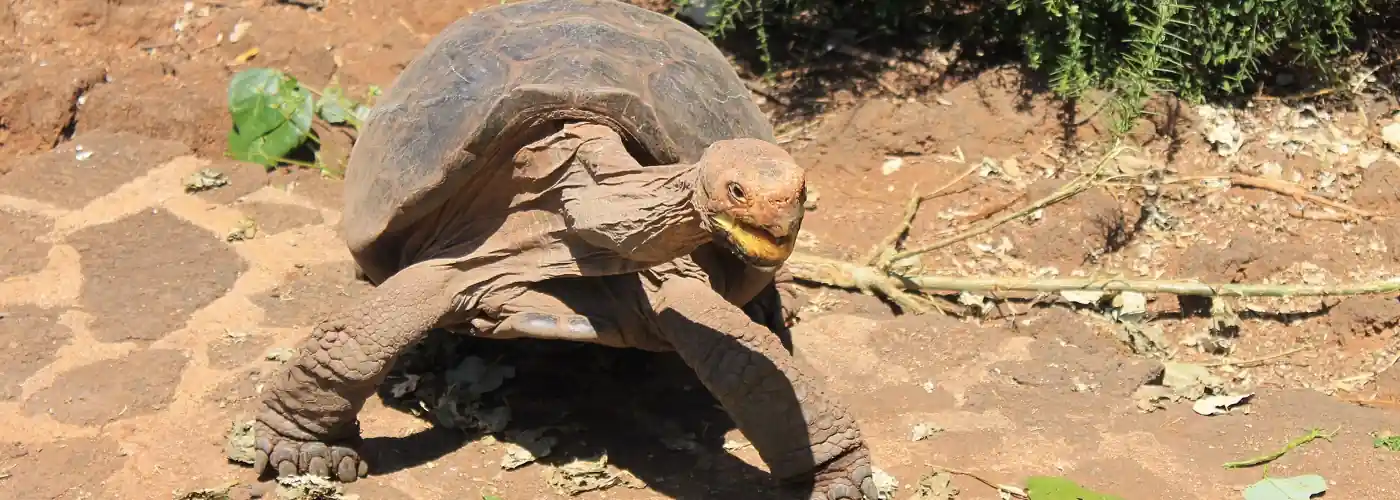
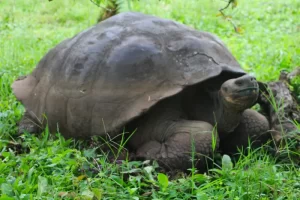 Morning – Fausto Llerena Breeding Center (Santa Cruz): At the Fausto Llerena Breeding Center, you will have the opportunity to photograph giant tortoises up close. The tour begins at the Galápagos National Park information center and continues to the Van Straelen Interpretation Center and the breeding facilities. A path then leads to the Española tortoise enclosure, where the tortoises are accustomed to people, making it an excellent location for photos.
Afternoon – Highlands / Twin Craters: In the Santa Cruz Highlands, you may observe various bird species, including small and large tree finches, ground finches, Galápagos flycatchers, and cattle egrets, often standing on tortoise shells. The drive through the reserve reveals the contrasts of this diverse ecosystem, from agricultural zones to lush humid forests. Giant tortoises are frequently seen crossing paths or grazing in the grasslands.
The Twin Craters (Los Gemelos) are located on both sides of the road leading to Puerto Ayora. These impressive formations are not true volcanic craters but collapsed magma chambers surrounded by lush Scalesia cloud forest, home to the woodpecker finch and the vermilion flycatcher.
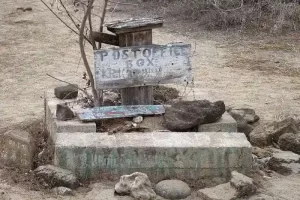 Morning – Post Office Bay, Devil’s Crown: You will first visit Post Office Bay, famous for its historic wooden barrel placed there by whalers in the 18th century to serve as an informal postal system. Visitors still continue this tradition today by leaving and collecting postcards for hand delivery.
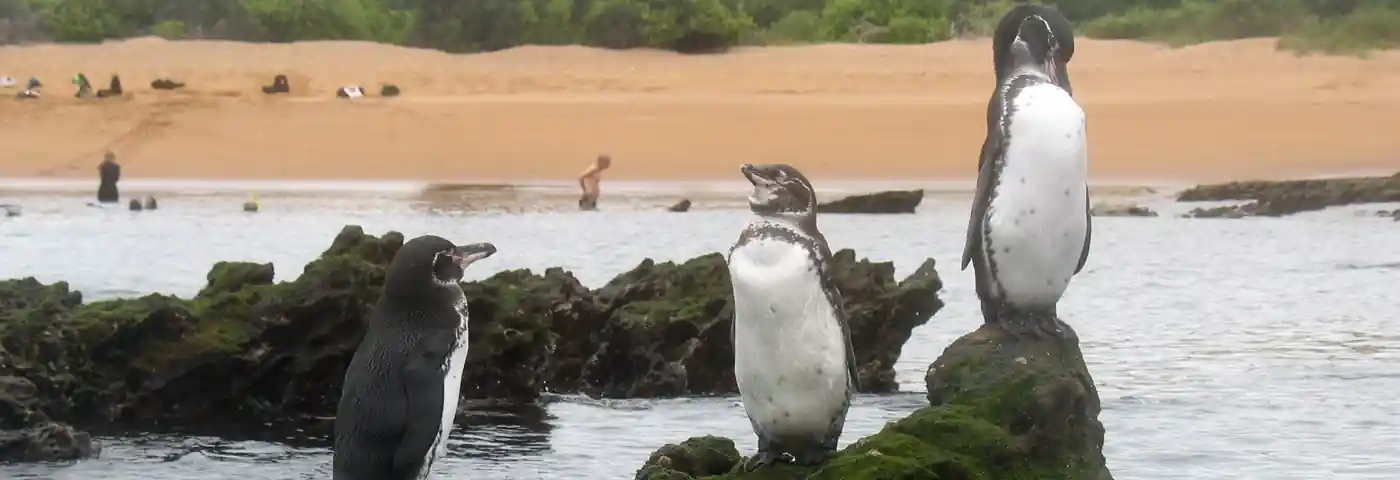
Devil’s Crown is considered one of the best snorkeling sites in the Galápagos. Here you can encounter an incredible variety of marine life. Along the coast, endemic seabirds such as Galápagos penguins, blue-footed boobies, magnificent frigatebirds, red-billed tropicbirds, swallow-tailed gulls, and lava herons can often be seen. Birdwatchers may also hope to glimpse the Floreana mockingbird among the opuntia cacti.
Afternoon – Cormorant Point: Cormorant Point forms the northern tip of Floreana Island and consists of small volcanic cones covered with palo santo dry forest vegetation. The green sand beach contains large amounts of olivine crystals blown from surrounding tuff cones. The nearby “flour sand” beach is made of extremely fine white coral sand created by parrotfish grinding coral skeletons. Stingrays are often seen buried in the sandy seabed, and during the first months of the year, green sea turtles come ashore here to nest.
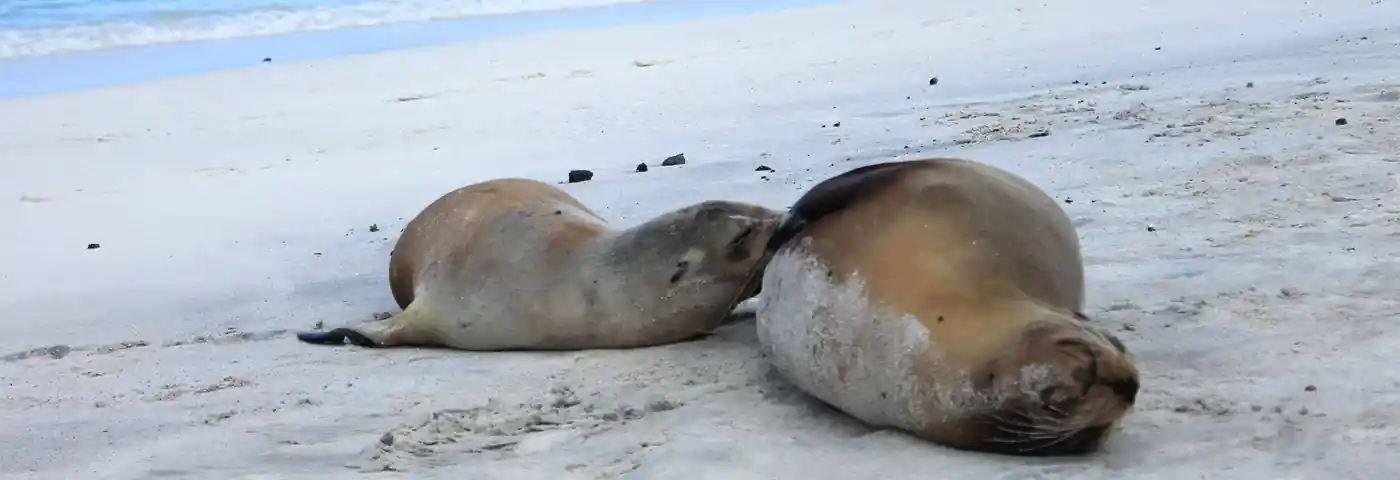
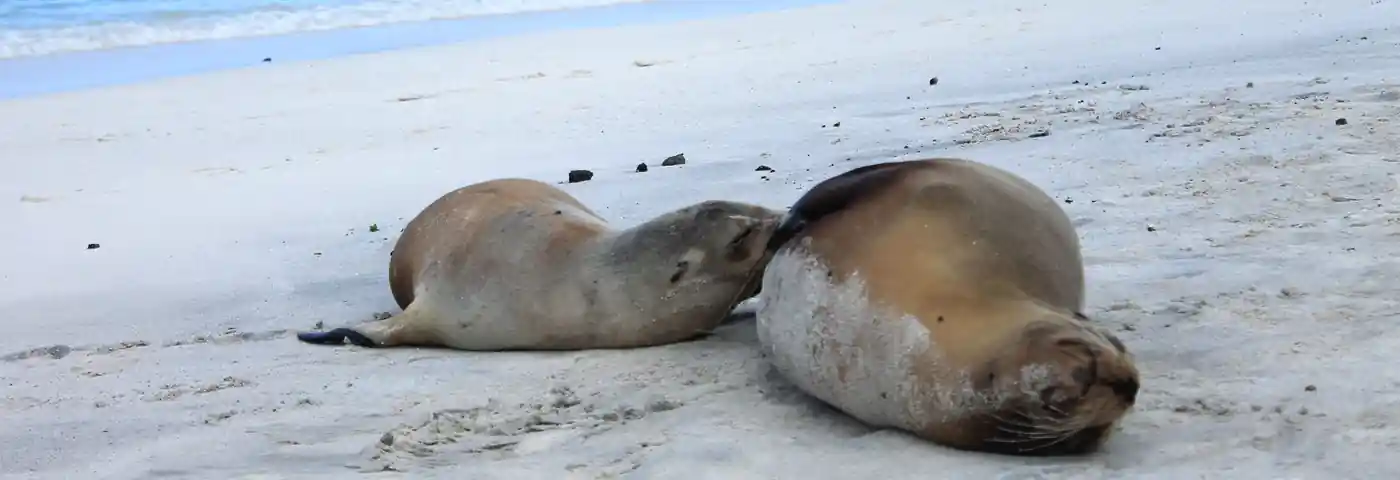
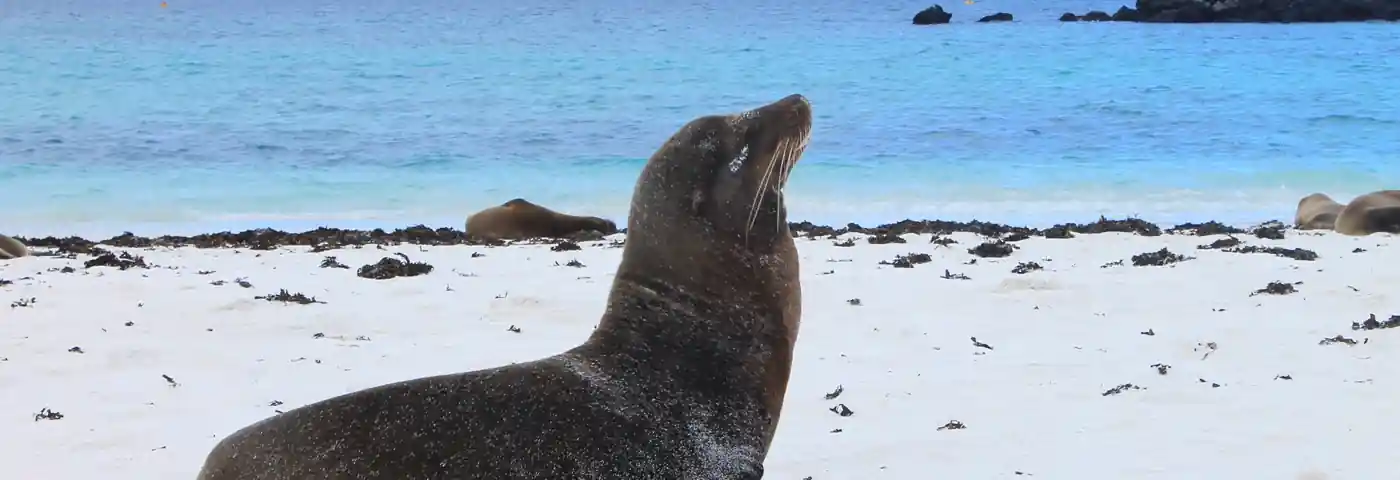
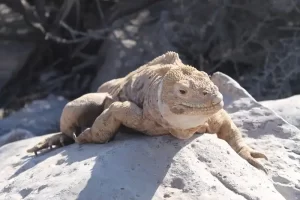 Morning – Santa Fe Island: A colony of Galápagos sea lions welcomes you upon arrival at Santa Fe Island. Here you may enjoy swimming or snorkeling among tropical reef fish in the crystal-clear waters of Barrington Bay. The island is also known for its impressive forests of giant opuntia cacti, some exceeding 10 meters in height. Following a wet landing, you will take a guided nature walk on this ancient volcanic island.
Afternoon – Lobos Island: Lobos Island lies about one hour from Puerto Baquerizo Moreno and is home to a small colony of blue-footed boobies and frigatebirds. Sea lions are abundant along the beach, and various shorebirds may also be observed.
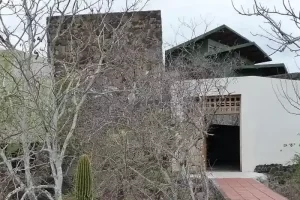 Morning – Interpretation Center (San Cristóbal): The Gianni Arismendy Interpretation Center is located near the capital, Puerto Baquerizo Moreno. Informational displays, photographs, models, and diagrams explain the origin of the Galápagos Islands, including their volcanic formation, ocean currents, climate, and the arrival and evolution of species throughout the archipelago.
After this excursion, you will be transferred to San Cristóbal Airport for your return or onward flight.