Ever since I was little, I have always loved to dance. When I was a teenager I danced especially Standard, Hip Hop and Jazz. When I finally knew that I will go to Ecuador, I was willing to learn the Ecuadorian dances and traditional music. The dances range from dances with West-African and European roots to native dances which are found in the deep Amazonas.
Today, the “Pasillo” is one of the best known Ecuadorian dances which has its origin from the classical Vienna waltz. The style of the “Pasillo” music represents as well the national music genre. However, next to the folk dances of “Pasillo”, Pascalle and Yarabi, there are many locations with exciting and multifaceted discotheques. It is impossible NOT to dance in one of the many bars and discos with Merengue or Reggaeton (which is a combination of hip-hop and Jamaican Reggae). Next to it, Salsa and Bachata, my personal favorite dances, bring a lot of fun and are found in every bar in Quito!
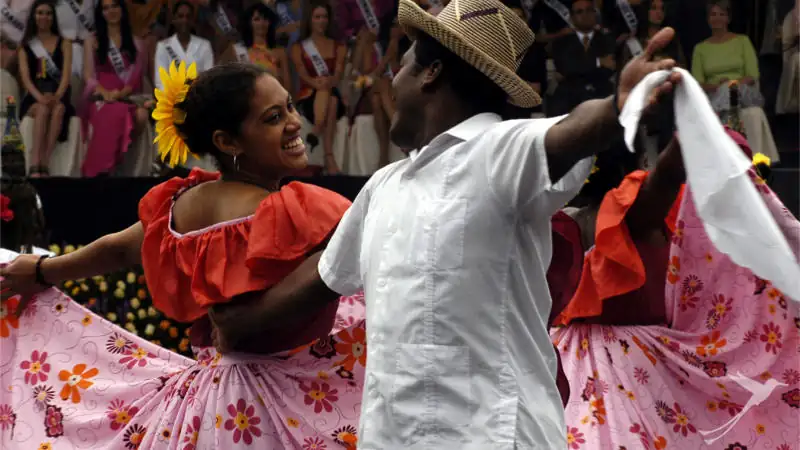
Right from the beginning, I was impressed by the Ecuadorian dances, the different styles and the passion for dancing. I have the feeling that (without an exception) everyone in Ecuador knows how to dance or plays the guitar, much less their rhythm feeling. Motivated and determined, I decided to get to know this wonderful culture even better with dancing lessons. I choose the partner dances Bachata and Salsa which counts as one of the most erotic dances in Latin America. Close contact to the partner is standard and a part of the culture, which other cultures (for instance, me in relation to European culture) firstly need to attempt and accept. The genre of Bachata originated in the Dominican Republic and consists of many variations of guitar types as it is typical in the Latin American dances. One famous Bachata Band is “Aventura” who modernized the traditional themes and sounds with own tenors and contents along with some modern US-American music elements. I signed in at the dancing school “Enlaz Arte” in Quito and was lucky to have a “real” Latino as a dancing instructor. We learned incredibly much: a sense of rhythm, the right facial expression while dancing, great choreographies and especially the passion for Bachata! With the time the dancing steps got more difficult, the music got faster and the turns got more expanded. All in all, I had a lot of fun and I am really happy that I accepted this challenge!
Ecuadorians love to dance! It doesn’t matter where they are: whether on parties, in public parks, at sport facilities or in the own living room – just everywhere where music is played! It is a big part of the Ecuadorean culture which you can also get to know if you are here. Just listen to the music and move to the cadence … the rest just happens! I certainly can recommend dancing classes for everyone who stays a little bit longer in Quito. It is a unique experience and afterwards you take a “part” of the Ecuadorian culture to your home.
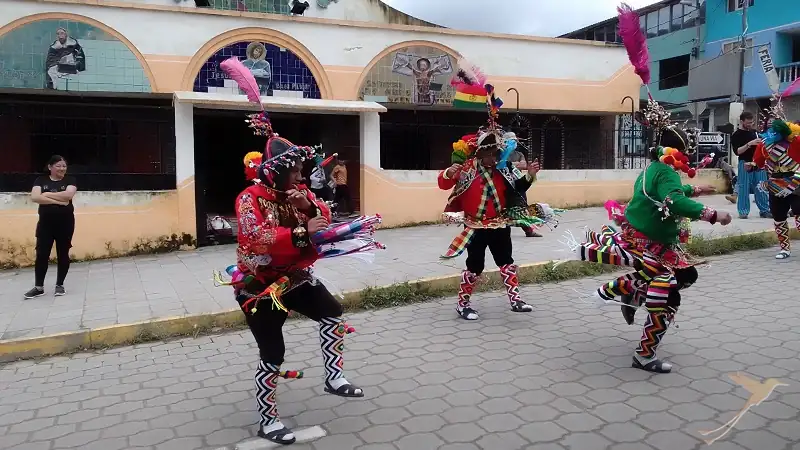
In the meantime, I’m already seeking for a dancing challenge then there are so many other wonderful (classical) dances which can be explored in this beautiful country!
Traditional dances of Ecuador and where to see them
Salsa and bachata fill Quito’s dance floors, but Ecuador’s own dances tell the story of the country. These are the ones worth seeing in person:
- Sanjuanito: the joyful Andean rhythm of Imbabura. It takes over the streets of Otavalo and its Inti Raymi celebrations around the June solstice, when whole communities dance in circles for days.
- Pasillo: born from the European waltz, it became Ecuador’s national music. Listen for it in Quito’s old town and in performances of Andean music.
- Danzante: the dancers of Pujilí wear tall, colorful headdresses during the Corpus Christi festival in the Andes.
- Diablada Pillareña: every January 1–6, hundreds of masked “devils” dance through Píllaro, in Tungurahua.
- Mama Negra: a parade of music, costumes and dance in the Mama Negra festival in Latacunga, held in September and November.
- Bomba del Chota and marimba: Afro-Ecuadorian rhythms from the Chota Valley and the Pacific coast. Marimba music from Esmeraldas is recognized by UNESCO as Intangible Cultural Heritage.
Festivals are the best time to see these dances: Quito’s December festivities, the Carnival of Flowers and Fruits in Ambato and Inti Raymi in June. Several of these places are part of our Andean Highlights tour.
Experience it with a local. Our Quito-based team designs private tours around Ecuador’s festivals, markets and communities, with your own guide and your own pace. Plan my private trip →