The wildlife of the Galapagos Islands is not a random encounter – it is the result of millions of years of isolation and adaptation on an archipelago located 620 mi (1,000 km) from the nearest continent. The fact that animals here have not developed a fear of humans is a direct consequence of this history: There were no predators that would have trained an escape response.
For travelers, this means: encounters at eye level, without fences, without minimum distance – but with a certified nature guide who explains national park rules and ensures that the interaction remains respectful.
This guide to Galapagos Animals shows which species you can observe on which island and in which month – and provides tips for wildlife photography.
The Most Important Animal Species of Galapagos
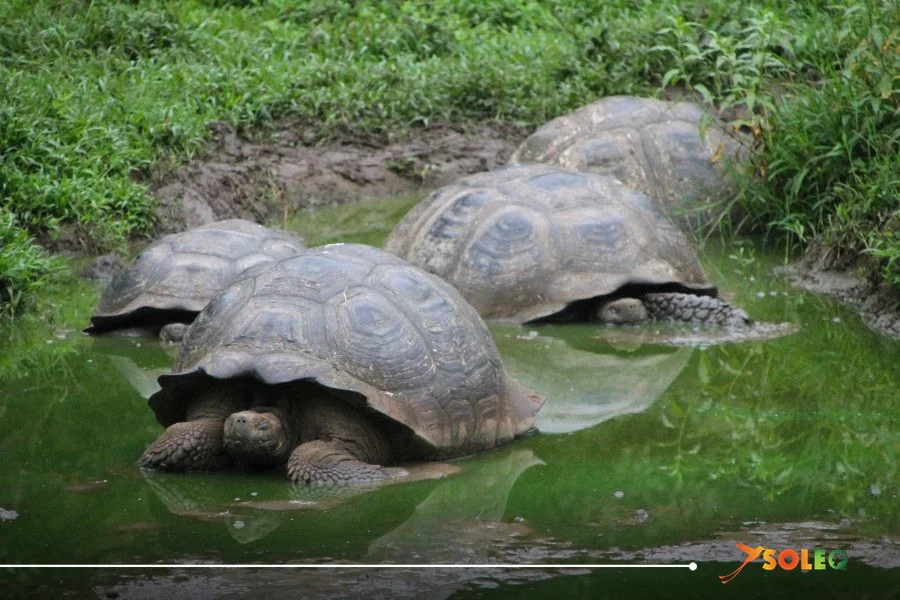
- Galapagos Giant Tortoise (Chelonoidis spp.): Symbol of the archipelago. Multiple subspecies, depending on the island. Free-ranging animals in the highlands of Santa Cruz and Isabela. The Darwin Research Station on Santa Cruz operates a breeding program.
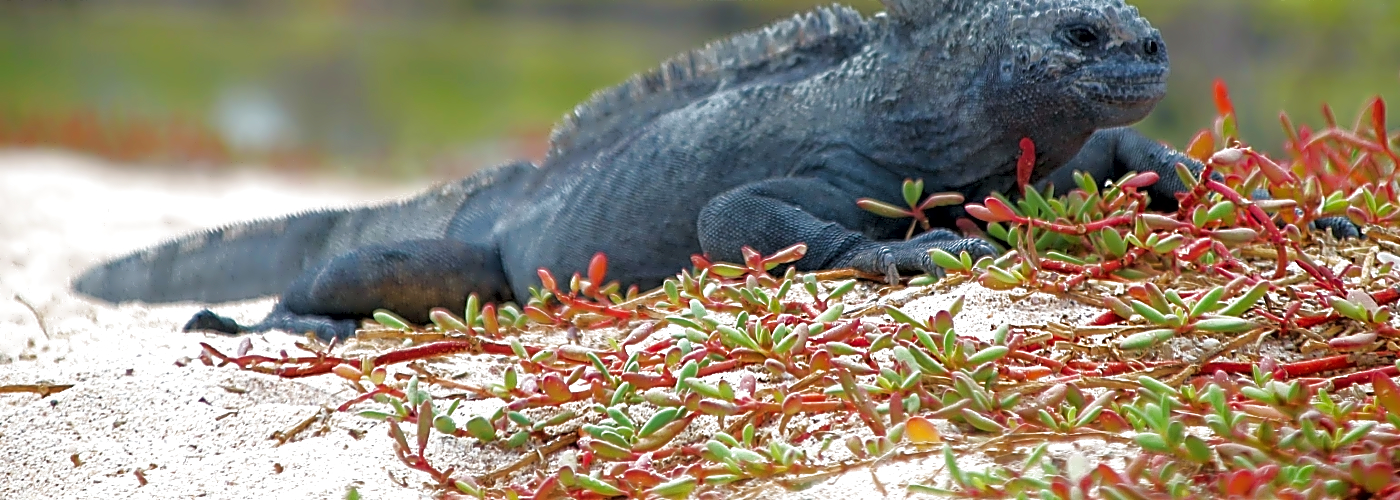
- Marine Iguana (Amblyrhynchus cristatus): The world’s only marine lizard. Colonies on almost all islands; largest on Fernandina. On Espanola, the animals developed a red-green coloration during mating season.
- Galapagos Sea Lion (Zalophus wollebaeki): Present on all inhabited and uninhabited islands. Social, curious towards snorkelers. Juvenile season: October to February.
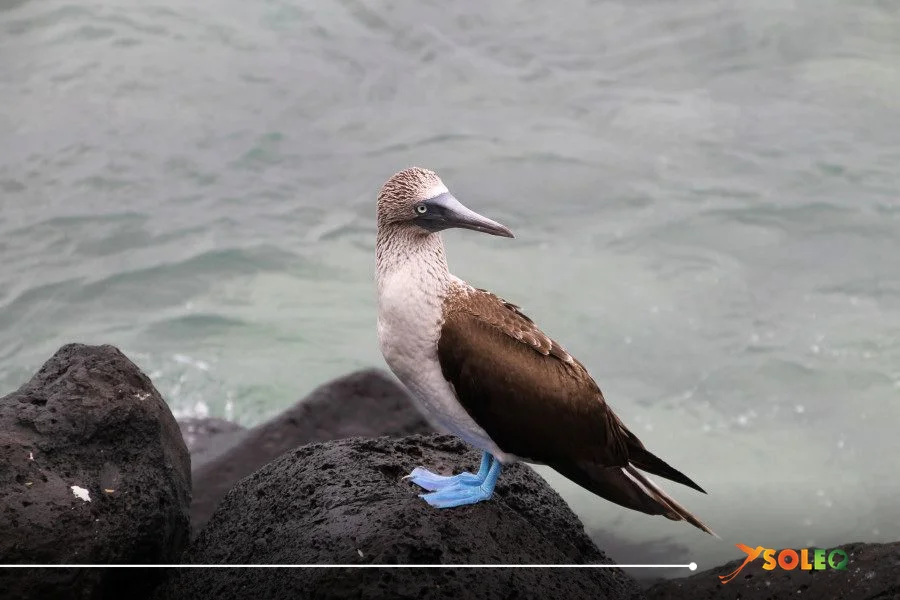
- Blue-footed Booby (Sula nebouxii): Recognizable by their bright blue feet, deliberately displayed during mating dance. Primarily on North Seymour, Espanola, and Isabela islands.
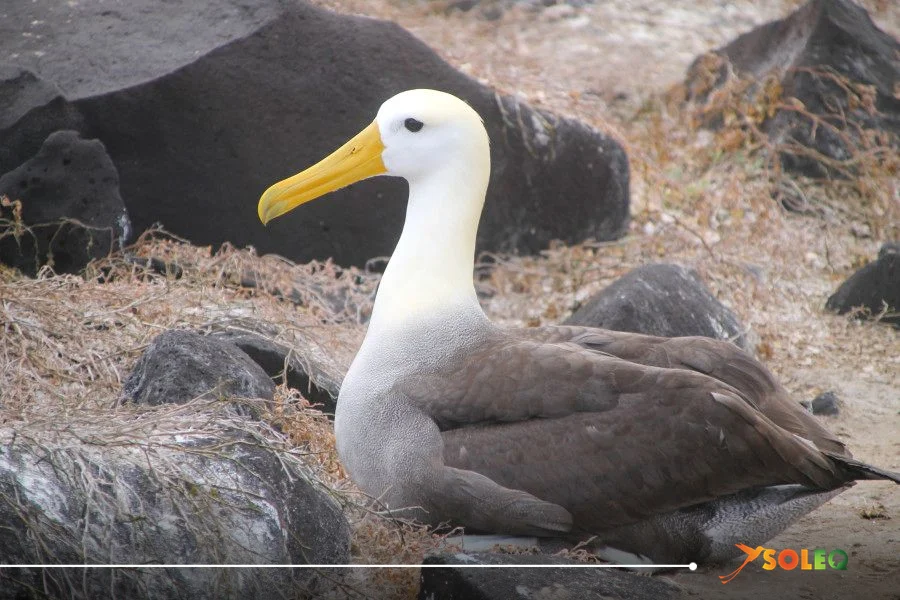
- Waved Albatross (Phoebastria irrorata): Breeds exclusively on Espanola (April–December). The slowest flyers of the archipelago – and the most impressive dancers.
- Galapagos Penguin (Spheniscus mendiculus): The only penguin species north of the equator. Mainly on Fernandina, Isabela (Bartolome, Sombrero Chino). Present year-round, more active in the cool season.
- Flightless Cormorant (Nannopterum harrisi): Endemic to Fernandina Island and Isabela’s west coast. Lost the ability to fly through adaptation to diving – its wings are vestigial.
- Whale Shark (Rhincodon typus): Seasonally around Darwin and Wolf (July–November). Plankton eaters, harmless to divers. Largest fish on Earth; individuals 33–39 ft (10–12 m) have been documented.
- Galapagos Hawk (Buteo galapagoensis): The archipelago’s only bird of prey. No flight tendency – occasionally lands on the guide’s arm.
- Darwin’s Finches (Geospiza spp., 14 species): The bird group that led Darwin to his theory of evolution. Beak shape varies depending on food source and island.
Galapagos Animals by Island
Santa Cruz: giant tortoises in the highlands (El Chato Ranch), marine iguanas on the coast, sea lions in the harbor, pelicans, 13 species of Darwin’s finches, Darwin Research Station for tortoise breeding.
Espanola (Hood): Waved albatross (April–December), Nazca boobies, blue-footed boobies, marine iguanas with red-green mating season coloration, swallow-tailed gulls (the world’s only nocturnal gull), sea lions.
Genovesa (Tower): Red-footed boobies (largest colony in the archipelago – around 140,000 pairs), Nazca boobies, great frigatebirds, magnificent frigatebirds, Wilson’s storm petrels, short-eared owls (active during the day, hunting storm petrels).
Fernandina: Marine iguanas (largest colony), flightless cormorants (nearly all known individuals of this species), Galapagos penguins, Galapagos hawks, sea lions. No human settlement – one of the most pristine places in the archipelago.
Isabela: Galapagos penguins (northernmost population), flightless cormorants (west coast), flamingos (Punta Moreno, lagoon), giant tortoises (6 subspecies on Isabela), marine iguanas, Galapagos sharks (Floreana Channel).
San Cristobal: Frigatebirds (Cerro Tijeretas, Lobos Island), sea lions (La Lobería beach), giant tortoises (Galapaguera), blue-footed boobies.
North Seymour: Blue-footed boobies (active colony with mating behavior), great frigatebirds (males with red throat pouch), land iguanas, sea lions.
Bartolome: Galapagos penguins (Pinnacle Rock), Galapagos hawks, marine iguanas, Galapagos sharks.
Wildlife Calendar: Species by Month
- January–March: Sea turtle egg laying (beach); Sea lion pups; Marine iguanas hatching; Frigate birds mating (North Seymour). Warm sea (24–27 °C/75–81 °F), calm crossings.
- March–May: Waved albatross arrival at Espanola (from April); Blue-footed booby courtship; Rainy season with good overall wildlife conditions. Moderate visitor density.
- June–August: Humpback whales (June–August); Garúa season; Flightless cormorants breeding (Fernandina); Penguins active; Whale sharks (from July). Coldest water temperatures (18–20 °C/64–68 °F). Good diving conditions. Peak visitor density in August.
- August–November: Whale sharks (Darwin/Wolf, July–November); Galapagos hawks with juveniles; Blue-footed booby chicks; Visitor density declining from September.
- October–December: Transition to warm season; First turtle nesting movements; More active sea; Waved albatross leaves Espanola (late December). Favorable travel conditions with lower demand.
Galapagos Wildlife Photography: DSLR and Telephoto Lens Tips
Galapagos wildlife presents a unique photographic challenge: Animals show no fear – but the national park requires a minimum distance of 2 meters (6.5 ft). This means: No 600-mm telephoto lens is needed for portraits. A 70–200-mm zoom covers most land animal shots.
Technical recommendations by subject:
- Sea lions and marine iguanas: 24–105 mm, photograph at ground level. Exposure compensation +1 to +2 EV on black lava rock necessary, otherwise animals will be underexposed.
- Waved albatross courtship dance (Espanola): 100–400 mm, burst mode (8+ fps). Dance movements are fast; ISO 800–1600 in overcast light. Best light: 6–9 AM and 4–6 PM.
- Blue-footed booby dive: 200–400 mm, Continuous AF, shutter speed ≥ 1/2000 s. Dive into water takes less than one second.
- Flightless cormorant (Fernandina): 70–200 mm sufficient. Animals show no fear; approach slowly and at ground level.
- Whale sharks underwater: Wide-angle (10–17 mm in housing), as animals come close. Priority: Housing depth (≥ 40 m/131 ft) and red filter from 5 m (16 ft) depth for color correction. Diving certification required.
- Darwin’s finches: 100–400 mm, patience. Birds are small and quick; burst mode recommended. Best visibility during rainy season (January–April), when vegetation is less dense.
General rule in Galapagos: Go lower, not closer. Ground-level perspective creates more dramatic images and disturbs animals less than approaching from above.
Galapagos Wildlife and Sustainable Observation
The Galapagos National Park controls annual visitor volumes in each zone. Certified guides – mandatory on all islands – know current capacity limits and direct groups accordingly. Feeding, touching, and collecting natural materials are prohibited. Mineral sunscreen is strongly recommended, as chemical filters damage marine ecosystems.
Solecu Tours works exclusively with licensed nature guides and boats complying with national park regulations. Our routes are planned to avoid overloading ecologically sensitive zones – even if that means a specific wildlife subject is not on the route for a particular trip.
For a Galapagos cruise or an individual trip to Ecuador, we are happy to advise you on the optimal islands and months for your specific observation goals.
Frequently Asked Questions About Galapagos Wildlife
Which Animals Can Be Seen Year-Round in the Galapagos?
Galapagos sea lions, marine iguanas, Darwin’s finches, and Galapagos penguins are present throughout the year. Giant tortoises in the highlands of Santa Cruz and Isabela can always be observed.
On Which Island Can You See the Waved Albatross?
The waved albatross breeds exclusively on Espanola (Hood Island), from April to December. The mating dance is most impressive from April to June.
Do You Need a Telephoto Lens in the Galapagos?
For land animals, a 70–200 mm zoom usually suffices. For waved albatross mating dance and booby diving, a 100–400 mm lens is advantageous.
Which Islands Are Recommended for Diving?
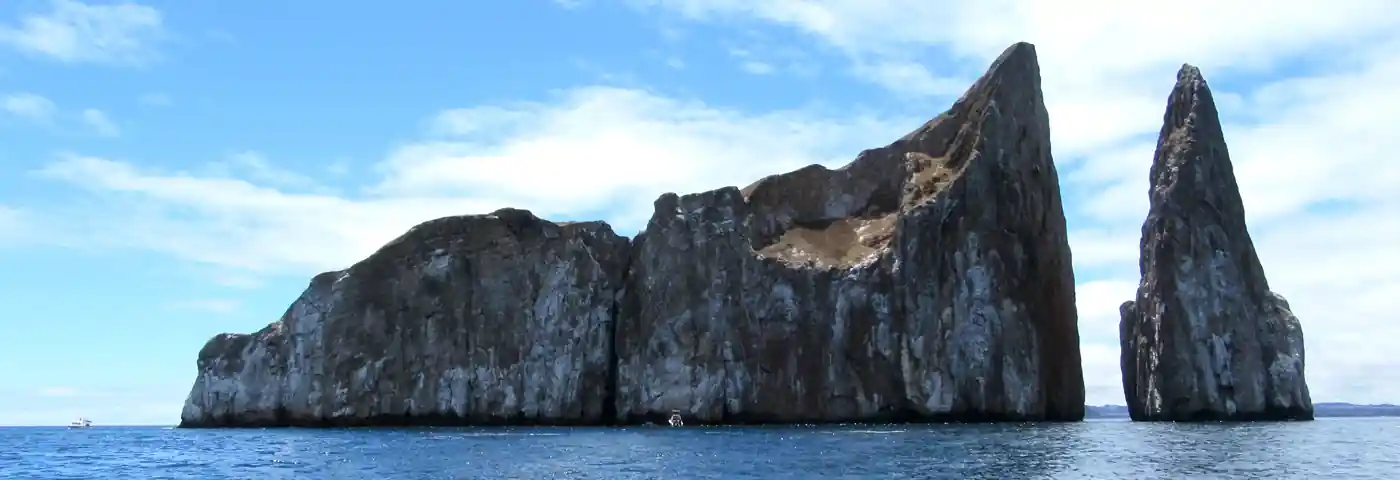
Darwin and Wolf for whale sharks (July–November) – liveaboard only. For snorkelers: Bartolome, Kicker Rock (San Cristobal), Isabela/Fernandina Channel.
Each Island Has Its Guardians — We Know Where to Expect Them
The waved albatross returns to Espanola each year. The flightless cormorant has its nesting sites on Fernandina. Whale sharks migrate from July to November around Darwin and Wolf. Each species has its place, season, and ecological logistics. A journey that respects this is not a standard tour — it’s a coordinated program that focuses on your observation goals.
Since 2006, Solequ Tours has been planning exactly such routes — without mass groups, with certified nature guides who understand each species’ behavior. Share your desired wildlife observations with us — we’ll design the route that leads there and the month with the highest chances.
Depart. Discover. Wonder. Write to us — we’ll turn your wishlist into a travel plan →