The road winds down from the Andes, and suddenly everything turns green. Dense fog envelops the mountain flanks as temperatures steadily rise. For me, the boundary between Quito’s dry elevation and one of Earth’s most biodiverse ecosystems remains captivating every time. Cloud forest birding in Ecuador is a journey into another ecosystem, just two hours southwest of Ecuador’s capital. I’ve been traveling regularly to the cloud forest for over two decades, and I’m consistently fascinated by the world that unfolds in a relatively short time.
The Mindo Valley sits at approximately 1,200 to 1,600 meters (3,900 to 5,200 ft) elevation on the western Cordillera of the Andes. The region welcomes you with emerald-green jungle interwoven with crystal-clear streams. The humid mountain air carries the scent of earth and vegetation. The fog formation that defines the forest results from the constant collision of moist Pacific winds with cold mountain peaks. This fog is the ecosystem’s heartbeat: it supplies the forest with water and creates perfect conditions for over 260 bird species.
For the local communities of the Choco Andino, this forest means far more than scenic beauty. The cloud forest is a sanctuary of water, air, and biodiversity — concepts indigenous cultures have understood for centuries. Today, conservation organizations and local government agencies work to preserve this region as living proof of sustainable tourism. Here, traditional wisdom meets modern conservation management.
What Makes Ecuador’s Choco Andino Exceptional for Birding?
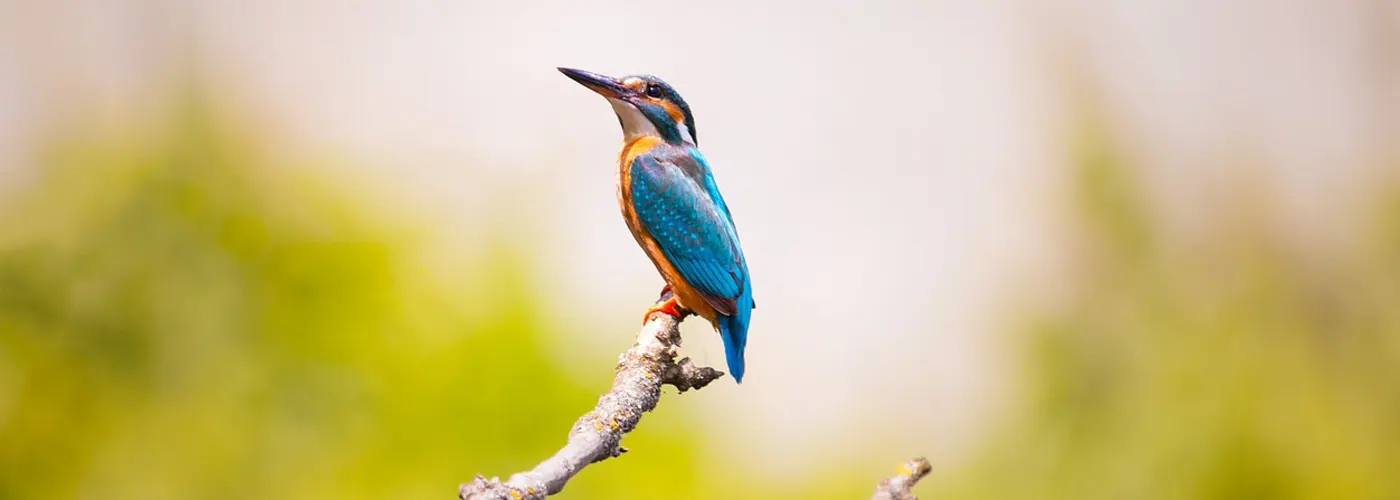
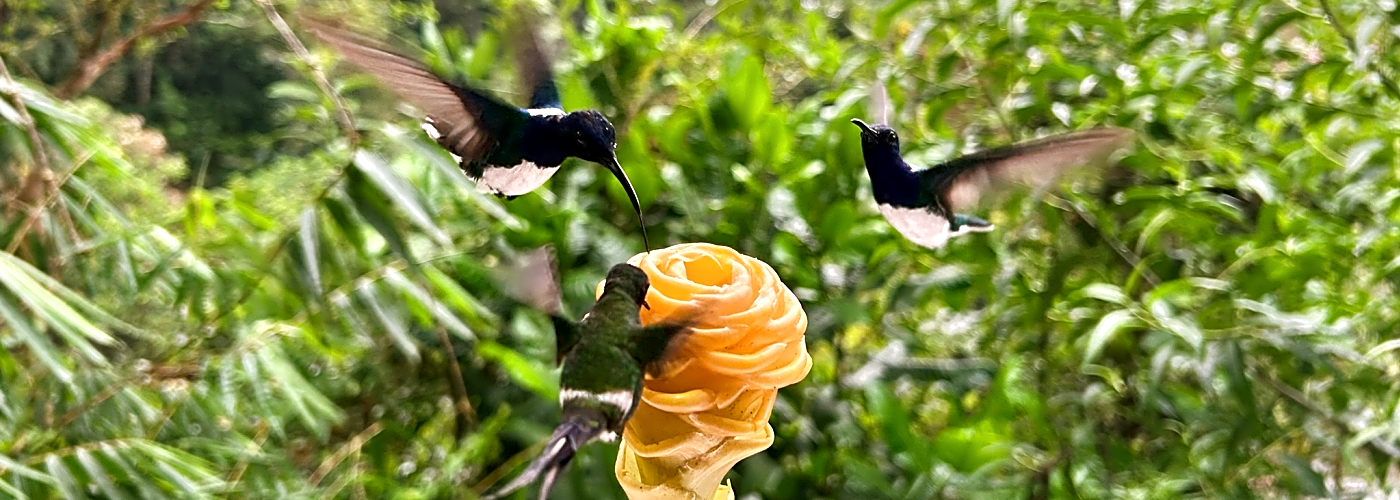
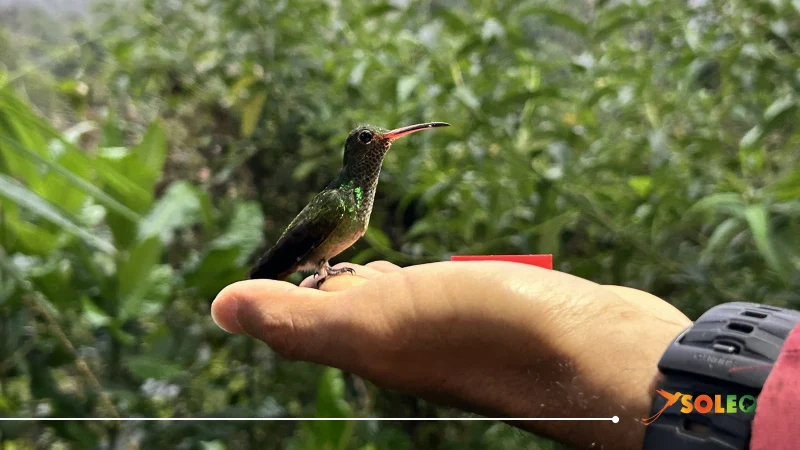
I’ve been to many birding locations — Costa Rica, Peru, Colombia. Ecuador’s Choco Andino differs fundamentally through three factors. First: concentration. On a relatively small area, you’ll find more bird species per square kilometer than at most other locations in South America. The famous tanager, the spectacled hummingbird, the cloud forest toucan, and dozens of species you won’t see anywhere else share this space. Second: accessibility. Unlike remote national parks, you can conduct genuine birding without extreme physical demands. Third: authenticity. The Choco Andino isn’t overrun with tourists like other birding paradises.
Where Exactly Is the Choco Andino Located?
Mindo is located in Pichincha Province, approximately 100 kilometers (62 mi) southwest of Quito. Travel time ranges between two and two-and-a-half hours, depending on traffic and driving style. The village sits at 1,250 meters (4,100 ft) elevation, nestled in a valley that stretches between two mountain ranges. The region is part of Ecuador’s northwestern rainforest — one of the world’s priority zones for biodiversity. Geographically, Mindo lies at the intersection between the Ecuadorian highlands and the Pacific lowlands, which explains the unusual diversity.
Fog, Water, and Legends: The Cultural Significance of Mindo’s Forest
Before ornithologists discovered Mindo, this forest was already sacred. The Tsáchila communities living in this region understand the cloud forest as a living entity — an organism that demands respect and mutual dependence. The constant fog was interpreted in traditional cosmologies as a manifestation of ancestors; the springs and waterfalls as pathways between worlds. This perspective isn’t meant romantically. It reflects deep ecological understanding: the forest regulates its own water, nourishes itself, and exists in a balance that has endured for millennia. Modern ecotourism in Mindo works best when it respects this wisdom rather than ignoring it.
Birding in Mindo: Distance, Duration, and Difficulty Level
Birding in Mindo isn’t demanding in the alpine sense. Hikes typically range between two and five kilometers (1.2 to 3 mi), with elevation changes of 100 to 300 meters (330 to 980 ft). Most travelers complete the popular Sendero Nube (Cloud Forest Trail) in a leisurely hour and a half to two hours. Here’s the art: birding doesn’t require speed, but patience. One kilometer per hour is normal observation pace, often with long stops to locate calls and focus binoculars.
Best Time to Visit Mindo Ecuador for Birding
Mindo can be visited year-round, but there are nuances. The dry season runs from June to September — theoretically. In practice, it rains in Mindo sometime or another. The cloud forest depends on rain; the “dry” season simply brings less intense rainfall.
The best birding period is October through December. Why? Migration is active, breeding season is underway, and birds are vocal. January through March is good but less spectacular. April through June is the rainy season — more precipitation, but also more active wildlife. Many experienced nature enthusiasts prefer the rainy season for this reason.
Both seasons have advantages, depending on whether you prioritize predictability and clear visibility or more intense nature experiences with fewer tourists.
What You Should Bring for Birding in Mindo
The layering principle is fundamental in Mindo. The forest is cool and humid in the mornings (14–20°C / 57–68°F), warms up at midday (20–28°C / 68–82°F), and cools down again in the evenings. Pack a fleece pullover and a waterproof windbreaker.
For footwear: ankle-high hiking boots with good tread are recommended. The forest floor is slippery from moss and moisture. I’ve slipped multiple times and learned: good soles save the day.
Sun protection, even in fog? Yes. The elevation and water reflection make UV radiation deceptive. Sunscreen, hat, and sunglasses belong in your pack.
For birding: binoculars are a real plus. A field guide or birding app helps identify species.
Organized Tour (recommended for maximum experience and bird knowledge):
An experienced nature guide knows the best locations, breeding sites, and species’ daily routines. While you keep your eyes open, you can listen. The difference between wandering around alone and going with an expert isn’t gradual — it’s fundamental. You not only see more birds, you also understand the ecology behind them. Transportation from Quito is arranged, time is optimized, and you can focus entirely on nature. The best time for birding is often mornings between 5:30 and 7:30 a.m.
For Whom Is Mindo Ecuador Birding NOT Suitable?
Mindo is spectacular, but not an urban stroll. I advise against it or recommend intensive preparation if you:
- Are seeking an “easy” forest walk without exertion or patience. The forest path is slippery, attention must remain sharp.
- Are allergic or hypersensitive to humidity and mold. The fog necessitates constant moisture.
- Are unwilling to wake up very early. Best birding time is 5:30–7:30 a.m.
- Expect birding to bring guaranteed sightings. Sometimes you see 40 species, sometimes five.
Encountering Ecuador’s Butterfly Abundance in Mindo
Birds are Mindo’s face, but butterflies are its soul. During my visit, I also went to a butterfly center — essentially a tent consisting of large netting with hundreds of fluttering wings. Magnificent blue morphos, black-red postman butterflies, transparent glasswing butterflies. A local guide named Diego showed me which food plants the caterpillars prefer, how the nectar works, how each species has a time window when it’s active. I realized how important they are in this particular ecosystem. Mindo harbors over 300 butterfly species — more than many countries.
Entry Prices and Opening Hours: Mindo Nature Reserve
The Mindo Reserve itself has no central entrance fee. Various attractions have separate fees:
- Butterfly center: $8–10
- Hummingbird reserves (several): $5–8 per reserve
- Canopy tour through treetops: $35–50
Opening hours: Most nature reserves open at sunrise (approx. 6:00 a.m.) and close at 5:00 or 6:00 p.m. I recommend starting early morning — the best birding time is 6:00–8:00 a.m., before the forest “awakens” and becomes loud. Peak visiting hours are between 10:00 a.m. and 3:00 p.m.; these are less productive for serious bird enthusiasts.
Sustainable Tourism in Mindo: Your Contribution to Conservation
At Soleq Travel, we have committed ourselves within our Travelife certification to offer trips with minimal impact on visited areas. In Mindo, this specifically means: small groups (normally max. 6 people), local nature guides who educate about forest conservation, and direct financial collaboration with communities.
What you can do: Respect signage and stay on trails — erosion accelerates exponentially when hundreds of hikers go off-trail. Don’t touch butterflies or birds, even if they’re close — especially if you’ve previously used insect repellent. Take your trash with you. Ask for local water sources instead of buying bottled water. Pay fair wages for tours — $30–40/day for an expert isn’t overpriced.
Frequently Asked Questions About Mindo Ecuador Birding
How much time do I need for birding in Mindo?
Minimum: half a day (3–4 hours active observation after arrival). Ideal: two full days with overnight stay. This way you can experience the important morning and evening hours multiple times, and Mindo certainly offers enough activities for in between. A day trip from Quito is possible but stressful. An overnight stay in Mindo enables relaxation and deeper experience.
Can I do birding in Mindo without an experienced guide?
Technically yes. Practically: you’ll miss 80% of the value. An experienced nature guide knows calls, breeding sites, seasonalities. Without this context, you see movement in the jungle and often can’t classify or identify it.
Are there age restrictions for birding in Mindo?
No. Physical requirements are minimal (flat to gentle paths, moderate pace). People up to 80+ can participate in many activities. Families with children are welcome — children are often the best nature observers.
Can I combine birding with other activities in one day?
To a limited extent. A full-day tour (8:00 a.m.–4:00 p.m.) typically includes birding, butterfly center, and lunch. Canopy tours are extra and scheduled separately. You can’t simultaneously observe intensively and do action activities. Choose a focus.
Are the trails in Mindo safe?
Yes. The region is politically stable. Violent crime is practically nonexistent. Trails are well maintained. Main risks are: slippery paths and perhaps certain insects if allergies are present. Wasps (rare but possible). Good footwear and standard precautions are normally sufficient.
How do I book a birding tour from Quito to Mindo?
Contact Soleq Travel. We curate tours with local nature guides, guaranteed transportation, and flexible timing. Send an inquiry — we’ll plan your adventure trip personally.
If this report has awakened something in you — if you want to understand nature rather than consume it — then contact us at Soleq Travel. We design trips to Mindo and throughout Ecuador in which authentic nature experiences and conservation receive the time and respect they deserve.