
What Makes Lake Humantay in Peru So Extraordinary?
Let me share something with you: when I reached Lake Humantay in December, I was absolutely captivated. And mind you, I thought nothing could surpass the majesty of Machu Picchu—but this place touches your soul in a different, unexpected way. Perched at over 14,000 feet in the Peruvian Andes, this turquoise gem radiates an almost mystical energy that no photograph can fully capture.
The water’s color is simply surreal: shades ranging from deep turquoise to emerald green, fed by glacial melt from the imposing Salkantay and Humantay snow-capped peaks. I had the extraordinary fortune of visiting under completely clear skies—a rarity during the height of the rainy season. Seeing the lagoon shimmering beneath the Andean sun, framed by sacred mountains, created a memory that will stay with me forever.
For Andean communities, Lake Humantay transcends the visual. It’s a natural and spiritual sanctuary where the Apus—the protective spirits of the mountains—dwell, and where ancestral traditions remain vibrantly alive, passed down through generations.
Where is Lake Humantay? Exact Location in Peru
Lake Humantay is located in the Cusco region, approximately 75 miles northwest of the city. The nearest village is Mollepata, from where you continue to Soraypampa—the starting point for the trek. The lagoon sits in a privileged setting, flanked by two giants of the cordillera: Nevado Salkantay, rising to 20,574 feet, and Humantay, towering above 17,700 feet.
This natural amphitheater creates a sensation of absolute isolation, as if the outside world pauses the moment you cross the final stretch of trail.
Getting to Lake Humantay from Cusco
Reaching Lake Humantay from Cusco requires an early start and a journey through landscapes that gradually transform from fertile valleys to high-altitude alpine scenery. The road first leads to Mollepata, then continues to Soraypampa, where the final trek begins.
While it’s possible to organize the visit independently, having proper logistics makes a significant difference—particularly in terms of safety, time management, and quality of experience. The altitude, changing weather, and trail conditions make careful planning essential for a seamless adventure.
Trekking to Lake Humantay: Distance, Time, and Difficulty
The hike to Lake Humantay covers approximately 1.2 miles of ascent, with an elevation gain of around 650 feet. On paper, these numbers seem manageable—in practice, the altitude transforms every step into a small challenge. Above 14,000 feet, your body works differently, and the pace becomes naturally slower.
Most travelers complete the ascent in one and a half to two hours, depending on acclimatization and fitness level. The trail is clear and well-marked, but demands consistency and respect for your body’s signals.
My December experience confirmed that the mountain always has the final word. Despite being the rainy season, the day dawned with clear skies and exceptional visibility. The landscapes were intensely green, there were fewer visitors than usual, and the sense of intimacy with the environment was difficult to put into words.
Best Time to Visit Lake Humantay in Peru
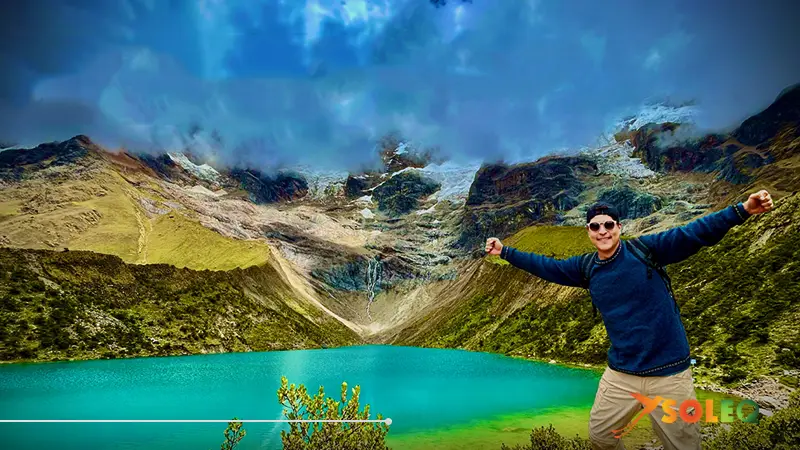
Traditionally, the optimal time to visit Lake Humantay extends from May through September, during the dry season. During these months, chances of clear skies are high and trail conditions tend to be more stable.
However, the so-called shoulder months or even the rainy season can offer unexpected rewards. December, for instance, delivers greener landscapes, fewer crowds, and an especially powerful atmosphere when the weather cooperates.
What to Bring for the Lake Humantay Trek
The mountains demand preparation. Layering is fundamental, as weather can change dramatically within hours. A waterproof jacket, thermal layers, high-SPF sun protection, and accessories for both cold and sun are essential.
Altitude deserves special attention. Spending at least a couple of days in Cusco before attempting the trek helps tremendously with acclimatization. Staying hydrated, resting well, and listening to your body is as important as any technical gear.
Guided Tour or Independent? Pros and Cons
Tour or independent visit? It depends on what you prioritize: comfort, time efficiency, and peace of mind—or the sense of complete independence.
Guided Tour (recommended for comfort and security):
- Pros: Solved logistics (transportation, timing, coordination), less mental friction, better management of contingencies (weather/altitude), more fluid experience. Ideal if you want to focus on enjoying Lake Humantay without worrying about details.
- Cons: More structured schedules and less flexibility to stop “at your own pace” along the way.
Independent (for highly autonomous travelers):
- Pros: Complete schedule flexibility, ability to adjust pace and time at the lagoon according to your energy.
- Cons: More variables to manage (timing, transfers, weather changes), less margin for error if altitude hits hard. In high mountains, independence is more enjoyable when you already know how your body responds.
My personal recommendation: if it’s your first time at altitude or you’re traveling with family, choosing a well-organized tour typically transforms the experience into something more pleasant, safer, and truly memorable.
Who Should NOT Attempt This?
Lake Humantay is spectacular, but it’s not a casual stroll. I don’t recommend it if you:
- Arrive in Cusco with very little time to acclimatize (altitude completely changes the experience)
- Have a history of severe altitude sickness, cardiac or respiratory issues without prior medical evaluation
- Expect a “gentle” hike without effort: the trek to Lake Humantay is short, yes, but altitude makes it demanding
- Aren’t willing to adapt to Andean weather, which can shift within minutes
That said: with proper planning and a sensible pace, many people who consider themselves “non-athletic” enjoy this immensely.
What to Expect Upon Arriving at Lake Humantay
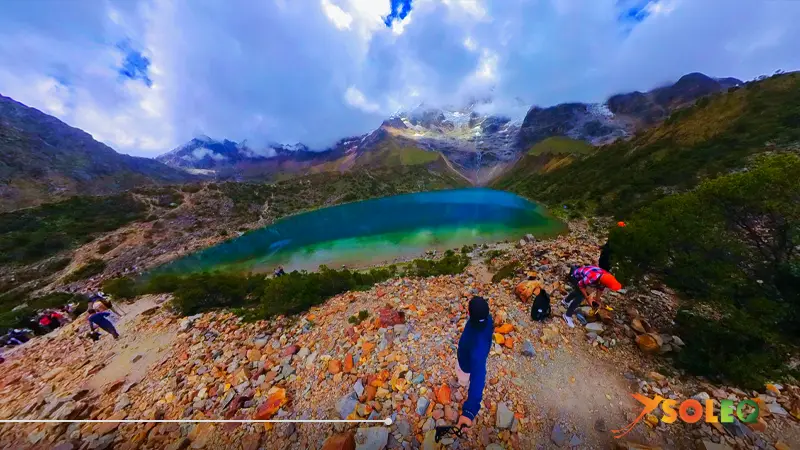
The moment the lagoon appears before your eyes is profoundly moving. The contrast between turquoise water, glacier white, and the intense blue sky creates an almost unreal scene. Unlike more famous destinations, the experience here feels more intimate, more raw and authentic.
Lake Humantay impresses not only through its beauty but through the palpable energy in the atmosphere. Remaining in silence beside the water, observing how light transforms the colors, and feeling the wind descending from the glacier is an essential part of the experience.
Frequently Asked Questions About Lake Humantay
Is Humantay worth visiting?
Absolutely. This lagoon will gift you one of the most stunning landscapes you’ll ever witness. The combination of natural beauty, cultural significance, and the personal challenge of high-altitude trekking creates a transformative experience.
When is the best time to go?
May through September offers the most consistent weather conditions. However, my December experience proved that timing and luck both play a role.
Is it safe?
With adequate preparation and a responsible operator like Solecu Tours, Humantay is completely safe.
Does altitude affect you significantly?
Yes, it can. Lake Humantay sits above 14,000 feet, and you’ll feel it—even if you’re in good shape.
To minimize altitude sickness:
- Acclimatize: Ideally spend at least two days in Cusco beforehand
- Pace: Walk slowly and steadily; breathe deeply
- Hydration and rest: More important than they seem
- Listen to your body: If severe headache, intense nausea, or pronounced dizziness appear, the responsible thing is to stop and, if necessary, descend
Can you go with children?
Yes, but it depends on age, acclimatization, and altitude tolerance. For families, the most important thing is prioritizing pace, breaks, and logistics that reduce stress. If the child has shown altitude sensitivity on other trips, it warrants more careful evaluation.
Can you rent a horse and how long does it take?
Yes, there’s usually an option to use a horse for the ascent, especially for those who prefer to reduce physical exertion. Time varies depending on pace but is generally comparable to walking (the difference is in fatigue and comfort). It’s best to consider it as a resource for enjoying without suffering, not as a “shortcut.”
Are there restrooms?
At the starting point (Soraypampa) you’ll normally find basic facilities. Near the lagoon, there’s typically no formal infrastructure, so it’s wise to come prepared with a mindset of respect: care for the environment and follow local guidelines.
Sustainable Tourism and Responsible Travel
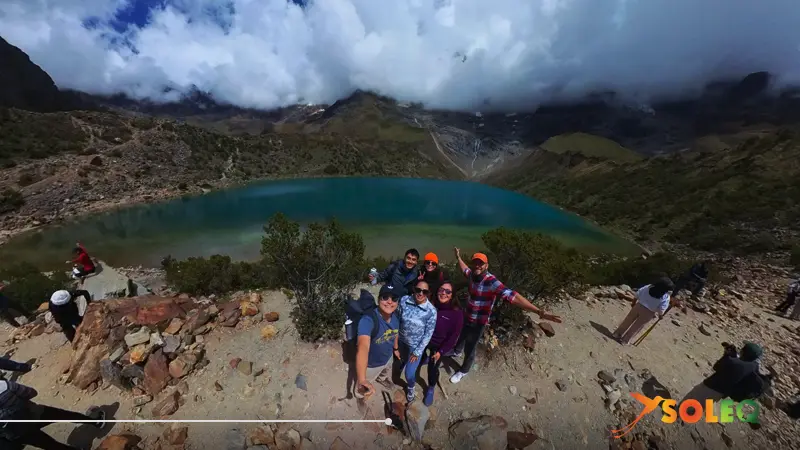
Humantay’s growing popularity brings important responsibilities. The high-mountain ecosystem is extremely fragile, and every visitor must commit to minimizing their impact. The golden rule is simple: leave nothing but footprints, take nothing but photographs and memories.
Respecting marked areas protects alpine vegetation that takes decades to recover. Always stay on marked trails and never alter stone formations you encounter—they’re part of the living cultural heritage of these mountains.
Insider Tips and Privileged Information
The best-kept secret about Humantay is simple: this place can overwhelm you emotionally in ways you don’t expect. It’s not just the physical altitude—it’s the spiritual elevation. In December, when I saw that impossible blue under perfectly clear skies, I understood why ancient Peruvians considered these places sacred portals.
Take genuine time for acclimatization in Cusco. The true magic of Humantay goes far beyond the perfect photograph. Gift yourself moments of absolute silence beside the water, feel the icy wind descending from the glacier, observe how light transforms the landscape. These moments of authentic connection are the real treasure of this journey.
Ready to experience this unforgettable adventure?
Book your Peru tour with Soleq Travel today and discover why thousands of travelers trust this family to create memories that last a lifetime. The mountains are calling—we’ll take you there safely, sustainably, and in an absolutely memorable way.