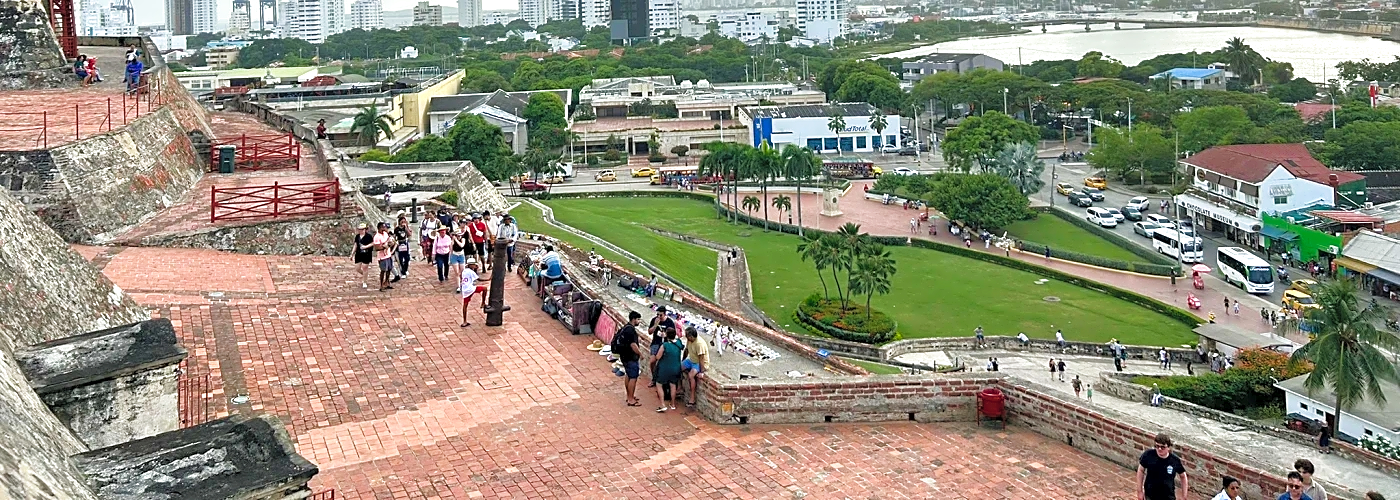
Located on Colombia’s Caribbean coast, about 220 kilometers (137 mi) northwest of Barranquilla, Cartagena presents itself as an extraordinary mosaic: a UNESCO World Heritage Site since 1984, former stronghold of the slave trade, now a center of authentic Caribbean culture that deeply moves travelers seeking genuine encounters. The old town, surrounded by original colonial walls from the 16th century, radiates in shades from burnt ochre to soft pink — a visual legacy that shimmers under the tropical Caribbean sun.
For Cartagena’s residents, this city is far more than a tourist attraction. It’s the heart of Colombian identity on the Caribbean, a place where African, Spanish, and indigenous cultures have fused into something new. And it’s precisely this authenticity that makes a Cartagena Colombia journey so valuable for discerning German travelers.
What Makes Cartagena de Indias in Colombia So Exceptional?
Cartagena isn’t your typical Caribbean destination. While other locations promote beach resorts and mass tourism, Cartagena offers something deeper: a vibrant cultural city where history isn’t a museum piece but lived reality. Four elements make this place unique. First: the intact colonial old town with over 500 years of architectural history, where every cobblestone pattern and every balcony ornament tells a story. Second: Africa’s presence — not as an exotic spectacle, but as a cultural force in music, dance, and spirituality that pulses daily through the streets. Third: Caribbean gastronomy that combines Spanish, African, and local ingredients into something unique, far removed from tourist clichés. Fourth: proximity to natural wonders — the Rosario Islands are only two hours away, and the hinterland offers mangrove swamps and Colombian savanna.
Unlike well-known destinations like Havana or Puerto Rico, Cartagena still maintains a certain intimacy. Tourist crowds concentrate in two or three districts — go deeper, and you’ll find corners where tourists are rare, where locals spend their evenings, where culture is authentically lived.
Geographic Location: Cartagena in South America's Context
Cartagena lies in Colombia’s Caribbean region, about 220 kilometers (137 mi) from the city of Barranquilla, on the country’s northernmost coast. The city sits on a peninsula, surrounded by Caribbean waters — a strategic location that historically made it one of South America’s most important ports. The hinterland is characterized by tropical mangrove forests, lagoons, and Colombian Caribbean savanna. The nearest international flight connection is Rafael Núñez Airport in Cartagena itself, which simplifies arrival for European travelers. From here, the Rosario Islands can be reached by boat in two to three hours — another reason why Cartagena is so attractive as a regional hub for Caribbean travel.
Cartagena's History: From Slave Trade to Cultural Renaissance
Cartagena was founded in 1533 and quickly developed into Spain’s most important South American port — not because of trade goods, but because of the horrific slave trade. Between the 16th and 18th centuries, an estimated 10 million Africans were transported through Caribbean ports like this one. This merciless history has shaped Cartagena and continues to form the city’s cultural identity today.
Unlike many places that whitewash their colonial pasts, Cartagena has begun to tell this history with honest complexity. The Museo de la Inquisición documents the brutal reality of the Spanish Inquisition. The streets themselves tell stories through their Afro-Caribbean presence. And local artists, musicians, and storytellers are working not to forget these narratives, but to process and transcend them.
Cartagena Attractions: Authentic Places Beyond the Tourist Circus
The classic sights are well known: the old town with its colorful colonial houses, Castillo San Felipe de Barajas, and the fortification walls. But a real Cartagena journey goes beyond these Instagram spots. The Getsemaní district, originally a working-class neighborhood, has evolved into a center of street art and local culture — here you’ll find the city’s real artists, not tourist theater. The Mercado de Bazurto is the authentic fish market, where local fishermen sell their catches and where the city’s cuisine comes alive. The Church of San Pedro Claver is not only architecturally significant but also the place where a Spanish Jesuit priest courageously preached against the slave trade — a rare example of moral courage in that era.
When visiting the Rosario Islands, skip the massive tourist groups. Small, sustainable islands like Isla Fuerte offer genuine encounters with Caribbean fishing communities, not commercial beach resort fantasies.
Best Time to Visit Cartagena: Climate and Cultural Rhythms
Cartagena has a tropical climate year-round — the question isn’t “When is it warm?” but “When is it most pleasant?” The dry season runs from December to March: clear skies, stable weather, perfect for city sightseeing. Downsides: it’s high season, the old town is crowded, prices rise, authenticity declines.
The rainy season (May to November) brings intense but brief rainfall — usually in the afternoon. Advantage: greener landscapes, fewer tourists, more vibrant local culture. Disadvantage: more humid, generally less pleasant for long city walks. My November experience confirmed that this period is underrated — the rains cleanse the air, leave breathtaking sunsets, and you can experience Cartagena as the locals do.
Both seasons have advantages, depending on whether you prioritize comfort and stable weather (December-March) or authenticity and fewer crowds (May-November).
Cartagena Travel Tips: From Arrival to Authentic Experience
Arrival and Initial Orientation: Rafael Núñez International Airport is located about 15 minutes north of the old town. A private transfer is safer than a taxi — we’re happy to arrange this as part of a round trip. Plan at least three to four days from the old town to truly get to know the city.
Choosing Accommodation: Better to avoid the overcrowded tourist hotels in the center. The Santo Domingo or Getsemaní districts offer boutique hotels where you meet locals and feel the real culture. Small colonial houses converted into guesthouses are more authentic and personal.
Getting Around the City: Walk rather than take taxis. Cartagena is experienced on foot — the contrasts between wealthy colonial houses and improvised neighborhoods, the art elements on walls, the people in cafés. A good local guide makes the difference between sightseeing and genuine discovery.
Exploring Cuisine: Arepas, ceviche, mofongo — eat where locals eat, not in tourist restaurants. Visiting Mercado de Bazurto in the morning and then choosing a small nearby restaurant is an authentic ritual.
Courtesy and Language: Although many Germans live in Cartagena and English is widespread, Spanish language skills (or the attempt) are appreciated everywhere. “Hola” instead of “Hey” makes a difference.
What to Bring to Cartagena
Light, breathable clothing is essential — Caribbean heat can reach 35°C (95°F). Good sun protection with high SPF is not optional: the Caribbean sun burns intensely. A light rain jacket for afternoon rains during the rainy season. Comfortable walking shoes for the old town’s cobblestones — no flip-flops. A daypack for water bottle, camera, documents. Insect repellent is important, especially in the hinterland or on the Rosario Islands.
Cartagena Old Town: Tangible History
The old town is a UNESCO World Heritage Site — a status that’s justified. But here’s the important distinction: a World Heritage Site can be a museum or a living city. Cartagena is still both. The old town isn’t preserved like a monument, but inhabited. People live in the colonial rooms, artists work in the alleys, restaurants serve modern interpretations of traditional cuisine. This isn’t “preserved antiquity” — this is culture in motion.
The fortification walls, originally built to protect against pirates and attackers, are now a beautiful sunset walk — the air cools down, the city glows in golden and rose tones, and you see the Caribbean Sea in dark turquoise. This is the moment when Cartagena reveals its beauty, not aggressively, but subtly.
Tour or Independent? The Right Strategy
An organized tour with a local expert really makes sense for Cartagena — not because of logistics (which are simple), but because of context. A good guide who grew up in Cartagena tells stories you won’t find in any guidebook. They know small restaurants, hidden art corners, personal perspectives on the slave trade and colonial history.
Independent travel is certainly possible — the old town is safe, navigable, full of cafés. The downside: you miss the cultural layer, the locals’ perspective, the stories behind the facades. My recommendation: a combination of both. The first or second day with a local cultural guide to understand the deeper meaning. The remaining days independently, exploring the city with this knowledge — that’s what makes the difference between tourism and travel.
Frequently Asked Questions About Cartagena on a Colombia Trip
How safe is Cartagena for German travelers?
Cartagena is safer than its reputation. The old town is very safe — there’s police presence everywhere, and tourists are protected. The rule: don’t go alone into unfamiliar neighborhoods at night, don’t wear expensive jewelry, exercise normal urban caution. I’ve walked through the old town at night dozens of times — no problem. The hinterland (mangroves, islands) is absolutely safe with a local guide.
How many days should I plan for Cartagena?
Minimum: three days for the old town to get a real feel for the city.