The Agricultural Heart of the Inca Empire
Let me share something I discovered during my December visit to the Sacred Valley: this valley isn’t simply a collection of archaeological sites between Cusco and Machu Picchu—it’s the place where Inca agricultural genius reached its highest expression. I remember standing on Moray’s circular terraces when I understood that each level, each irrigation channel, and each perfectly placed stone formed part of a sophisticated system that fed millions of people. Despite visiting during the rainy season, I was fortunate to enjoy days of clear skies that enhanced the intense greens of the corn fields and the snow-capped mountains on the horizon.
The Sacred Valley, known in Quechua as Wilcamayo, was considered by the Incas as an earthly mirror of the Milky Way. This fertile depression following the course of the Urubamba River was the breadbasket of the Tahuantinsuyo, producing the prized giant corn of Cusco and other crops that couldn’t grow at the altitude of the imperial capital. For the Incas, this valley represented far more than agricultural wealth: it was a sacred space where earth, water, and mountains merged in perfect cosmological harmony.
Location and Geography of the Sacred Valley
The Sacred Valley extends approximately 60 kilometers between the towns of Pisac and Ollantaytambo, following the Urubamba River from 2,800 to 2,900 meters above sea level. This altitude, considerably lower than Cusco (3,400 meters), creates a temperate microclimate that the Incas masterfully exploited for agriculture. The average temperature ranges between 18°C and 22°C (64-72°F) during the day, though nights can be cool, especially between May and September.
Geographically, the valley functions as a natural corridor between Cusco and Machu Picchu, offering spectacular views of snow-capped peaks like Chicón, Pitusiray, and Sawasiray that the Incas considered protective apus. The more benign climate than Cusco makes the Sacred Valley an ideal place for gradual acclimatization before undertaking higher-altitude treks like Vinicunca or the Inca Trail.
The Sacred Valley's Essential Highlights
Pisac: Market and Ruins in Perfect Symbiosis
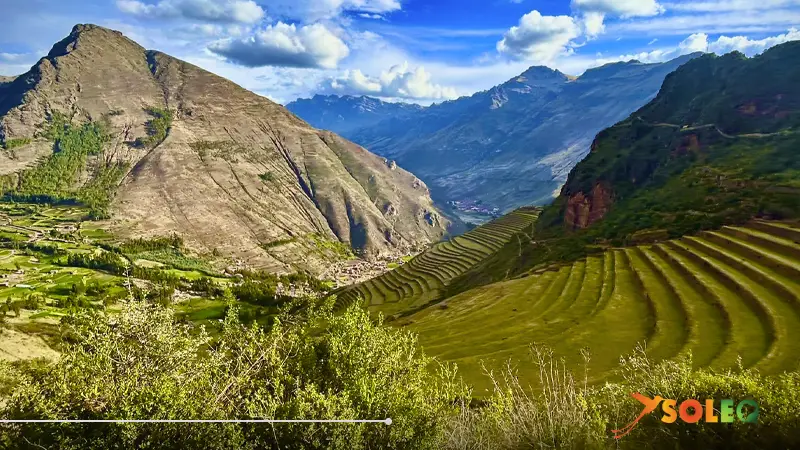
Pisac combines two completely different experiences: the most vibrant handicraft market in the Andean region and spectacular Inca ruins rising above the valley. The Sunday market attracts both locals exchanging agricultural products and travelers seeking quality textiles. The ruins of Pisac, less visited than Ollantaytambo, offer vertiginous agricultural terraces, an astronomical observation complex, and panoramic views that justify the ascent. During my visit, the sunset light bathed the terraces in golden tones, creating one of those photographic moments that no camera captures completely.
Ollantaytambo: The Last Living Inca Town
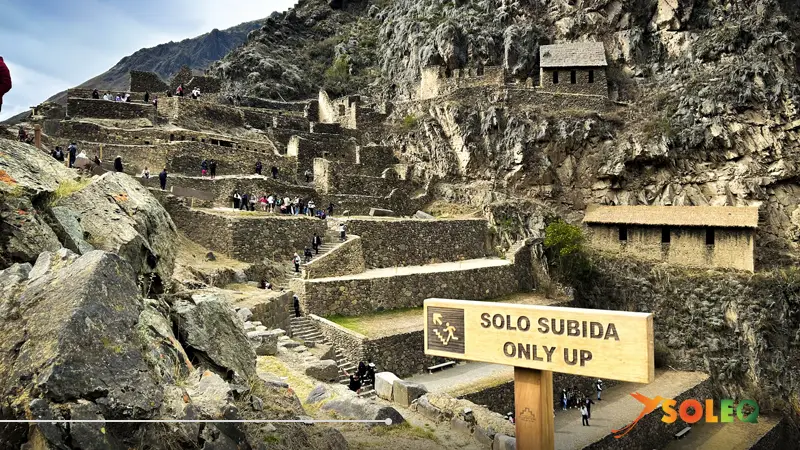
Ollantaytambo represents the last living Inca town, where the original urban layout remains intact with water channels running through cobblestone streets. Its fortress, with megalithic blocks weighing up to 50 tons transported from quarries across the valley, demonstrates engineering feats that continue to baffle modern specialists. Climbing the steep stairs to the Temple of the Sun rewards with valley views that reveal why the Incas chose this strategic location. Ollantaytambo also functions as the departure point for the train to Machu Picchu and the start of the Inca Trail.
Maras and Moray: The Perfect Pair of Inca Innovation
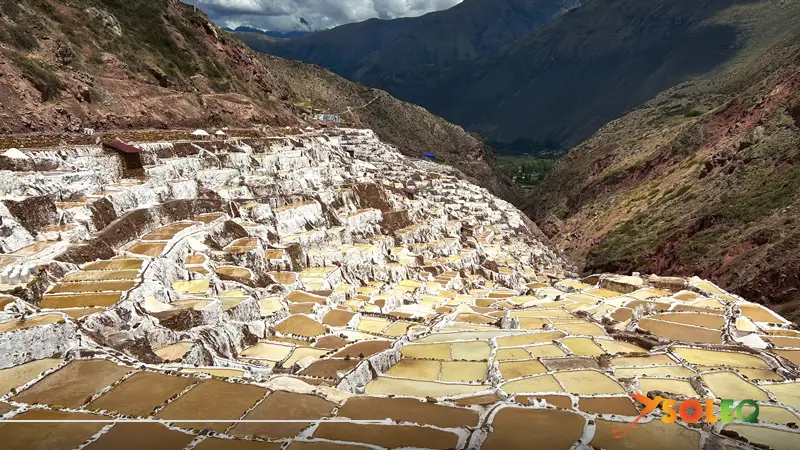
Maras and Moray constitute a perfect pairing of Inca innovation. The salt terraces of Maras, exploited since pre-Inca times, create a surreal landscape of more than 3,000 stepped pools that shine white under the Andean sun. Watching the salt workers tending these pools with ancestral techniques is to witness a tradition that refuses to disappear. Moray, just a few kilometers away, presents concentric circular terraces that functioned as an experimental agricultural laboratory. The temperature difference between the upper and lower levels reaches 15°C (27°F), allowing the Incas to simulate different ecological zones and adapt crops from throughout the empire.
Chinchero: Tradition and Colonial Heritage
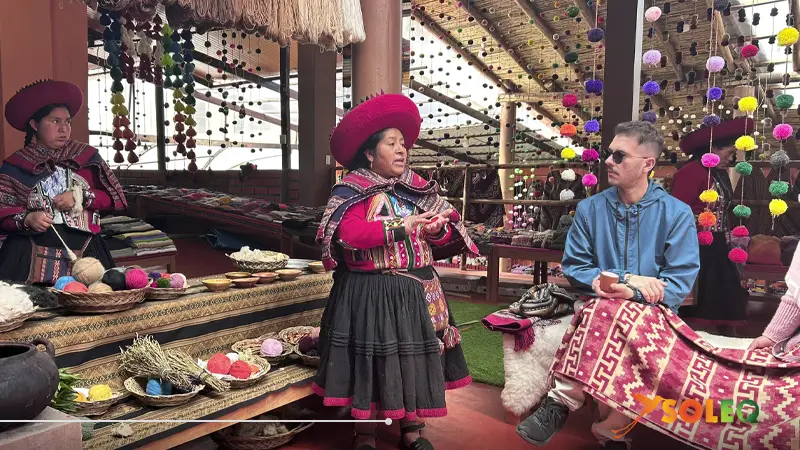
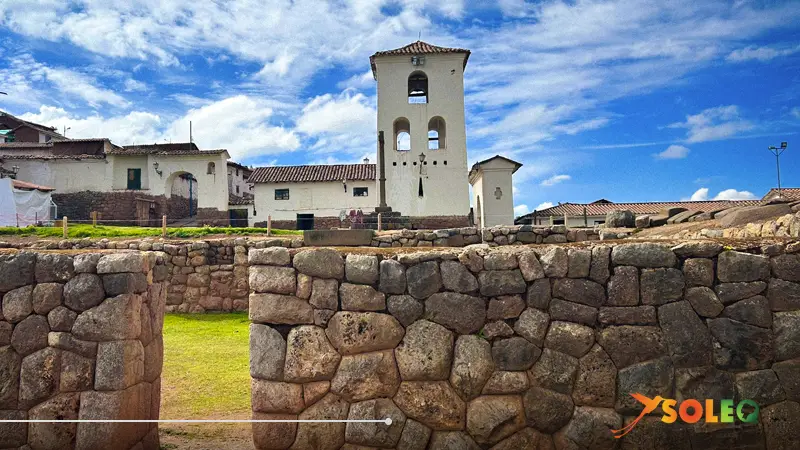
Chinchero, situated at a higher altitude (3,762 meters/12,343 feet), preserves Quechua textile traditions dating back to Inca times. On Sundays, the traditional market where exchanges between local communities predominate offers an authenticity that more touristy markets have lost. The Inca ruins include perfectly assembled polygonal stone walls that contrast with the colonial church built literally upon the Inca temple.
How Much Time to Dedicate to the Valley
A full day allows you to visit Pisac, Ollantaytambo, and the Maras salt terraces on an organized excursion, though the pace will be rushed. Two days offer an ideal balance for travelers with limited time: one day dedicated to Pisac-Ollantaytambo and another to Maras-Moray-Chinchero, with time to lunch leisurely and absorb each place without hurry.
However, three days transform the visit into an immersive experience. This time allows you to explore calmly, interact with local communities, enjoy dinners at countryside restaurants, and use the valley as an acclimatization base before Machu Picchu. For 15-20 day Peru itineraries, I recommend dedicating at least two nights in the Sacred Valley, allowing the valley’s more leisurely rhythm to contrast with Cusco’s intensity.
Visiting Independently or with an Organized Tour
The geography of the Sacred Valley facilitates independent exploration more than other Andean destinations. Colectivos (shared minibuses) connect Cusco with Pisac, Urubamba, and Ollantaytambo frequently and at low cost. Taxis can be hired for personalized routes to Maras and Moray. This option offers maximum flexibility for experienced travelers comfortable navigating local transport.
However, a well-designed tour eliminates logistics, optimizes time, and crucially, provides historical context that transforms stones into stories. Specialized guides reveal architectural details, explain Inca cosmological concepts, and share legends that the sites alone cannot communicate. For travelers who prioritize depth of experience over absolute independence, especially on 15-20 day visits where every day counts, an operator like Soleq Travel maximizes value through access to exclusive experiences and expert knowledge.
Acclimatization and Health Considerations
The Sacred Valley, situated between 2,800-3,800 meters (9,186-12,467 feet) depending on the town, presents less altitude challenge than Cusco. For many travelers, spending the first nights in Urubamba (2,870 meters/9,416 feet) before ascending to Cusco facilitates more gradual and comfortable acclimatization. Altitude sickness symptoms are less frequent here than in the imperial capital.
Nevertheless, excursions from the valley to sites like Chinchero or the nearby high-altitude lagoons require respect for elevation. Hydrate constantly, walk slowly, avoid alcohol the first days, and consider coca tea. During my visit, I greatly appreciated waking up at 2,900 meters instead of 3,400, feeling greater energy to explore all day.
Practical Information: Tickets and Accommodation
The Cusco Tourist Ticket (BTC) covers most Sacred Valley sites including Pisac, Ollantaytambo, Chinchero, and Moray. The Maras salt terraces require a separate entrance fee (10 soles) that goes directly to the local community. Acquiring the complete BTC (130 soles for foreigners, valid 10 days) optimizes costs if you plan to also visit sites in Cusco.
Regarding accommodation, Urubamba offers options from budget hostels to luxury boutique lodges. Staying in the valley provides tranquility that Cusco doesn’t offer, with lush gardens, mountain views, and access to authentic rural experiences. For well-designed itineraries, combining nights in the valley with nights in Cusco offers the best of both worlds.
Exclusive Experiences and Community-Based Tourism
Traditional textile workshops reveal techniques of spinning, natural dyeing with plants and minerals, and weaving transmitted from mothers to daughters across generations. Watching the weavers create complex geometric patterns without following written patterns is to witness applied Inca mathematical knowledge. Some experiences include the opportunity to try spinning alpaca wool on a hand spindle, quickly discovering the dexterity it requires.
Sustainable Tourism in the Sacred Valley
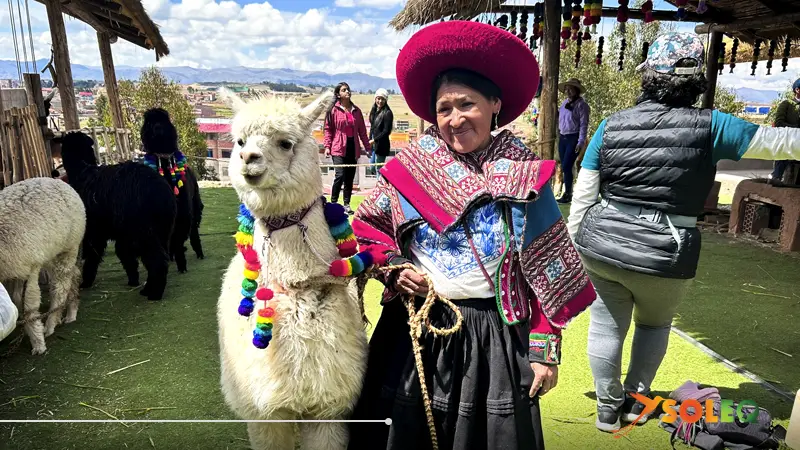
Tourism has transformed the Sacred Valley’s economy, bringing prosperity but also pressure on resources and traditions. At Soleq Travel, our commitment to sustainable tourism, backed by our Travelife certification, is reflected in every aspect of our valley operations.
Choosing experiences operated directly by communities, such as textile workshops in Chinchero or countryside dinners in Urubamba, ensures that economic benefit reaches those who preserve these traditions. Responsible tourism here doesn’t diminish the experience; it profoundly enriches it by authentically connecting us with the valley and its people, ensuring that future generations can continue living from their land and culture.
Multi-Country Connections from the Sacred Valley
The Sacred Valley integrates perfectly into extensive 15-20 day Peru itineraries, functioning as a hub between Cusco and Machu Picchu. A typical sequence dedicates 2-3 days to the valley, allowing acclimatization while exploring archaeological sites and cultural experiences, before continuing to Machu Picchu and then to destinations like the Peruvian Amazon or Lake Titicaca.
For travelers seeking multi-country experiences, the Sacred Valley anchors 20-30 day circuits that combine Peru with Bolivia, crossing Lake Titicaca to La Paz and the Salar de Uyuni. Alternatively, after exploring southern Peru including the valley, itineraries can head toward Ecuador to discover Quito, the Avenue of the Volcanoes, and culminate in the Galápagos. These routes create coherent narratives connecting pre-Columbian civilizations, unique ecosystems, and transformative cultural experiences across multiple South American countries.
Frequently Asked Questions About the Sacred Valley
Is the Sacred Valley worth visiting?
Absolutely. The Sacred Valley offers essential context for understanding Machu Picchu and Inca civilization. The agricultural terraces, irrigation systems, and ceremonial complexes reveal Inca sophistication in ways that Machu Picchu alone cannot. Additionally, the living cultural experiences and spectacular landscapes make the valley a destination in its own right, not simply a stop en route.
Is it safe to visit the Sacred Valley?
Yes, the Sacred Valley is generally very safe for tourists. The main towns like Pisac, Urubamba, and Ollantaytambo have police presence and communities accustomed to receiving visitors. Maintain basic standard precautions and respect private properties, especially in rural communities where agricultural lands are family livelihoods.
What's the best time to visit?
The dry season from May to September offers clear skies and predictable weather ideal for photography. However, my December experience demonstrated that the rainy season can offer incredibly green landscapes, fewer visitors, and spectacular days if you’re lucky with the weather. Mornings are usually clear even during the wet season.
Is it appropriate for traveling with children?
The Sacred Valley is excellent for families. The lower altitude than Cusco reduces acclimatization problems, the archaeological sites offer space to explore, and experiences like visiting the salt terraces or seeing alpacas fascinate children. The towns are quiet and safe. Consider the level of physical activity that the steep ruins of Pisac or Ollantaytambo require according to children’s ages.
Do I need the Tourist Ticket?
If you plan to visit Pisac, Ollantaytambo, Chinchero, and Moray, the Cusco Tourist Ticket offers better value than individual entries. The complete ticket (130 soles) covers 16 sites valid for 10 days. There’s also a partial ticket just for the Sacred Valley at lower cost if you won’t be visiting sites in Cusco city.
The Valley That Fed an Empire
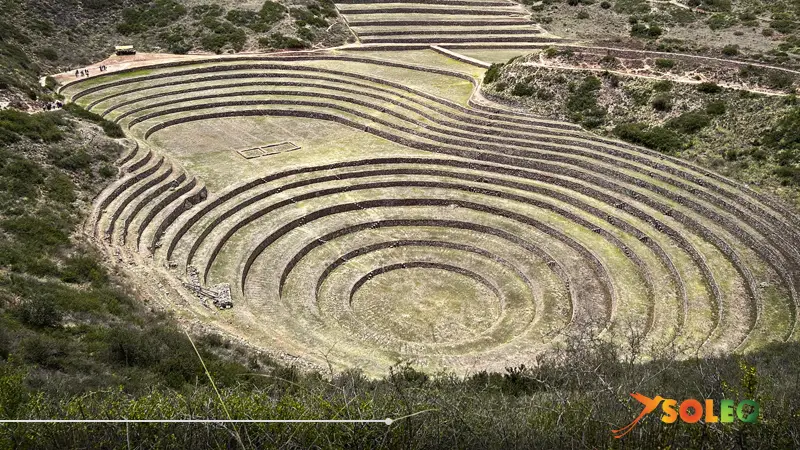
The Sacred Valley isn’t simply a day trip from Cusco or just the route to Machu Picchu. It’s the agricultural heart where the Incas demonstrated that they understood the land, water, and seasons with a sophistication that still amazes us. My experience traversing Moray’s terraces, exploring Ollantaytambo’s streets, and observing Maras’ salt pools revealed to me that this valley remains alive, worked by descendants of those agricultural engineers who fed an empire.
Strategically integrated into a luxury 15-20 day Peru itinerary, the Sacred Valley offers the perfect balance between spectacular archaeology, authentic cultural experiences, breathtaking landscapes, and the necessary tranquility to absorb everything without rush. The valley’s magic is amplified when understood as part of a larger narrative connecting Inca engineering, living communities, and sustainable future.
Ready to Discover the Sacred Breadbasket of the Inca Empire?
At Soleq Travel, we design exclusive itineraries that integrate the Sacred Valley into comprehensive Peru experiences and multi-country South American circuits, with impeccable logistics, certified specialized guides, and the commitment to sustainable tourism that defines us. Since 2006, we’ve helped thousands of travelers discover Latin America with the confidence that only 20 years of experience can provide. Contact us today and allow us to create your dream journey, where each ancestral terrace and each cultural encounter is designed so you only worry about absorbing the magnificence of the Peruvian Andes.