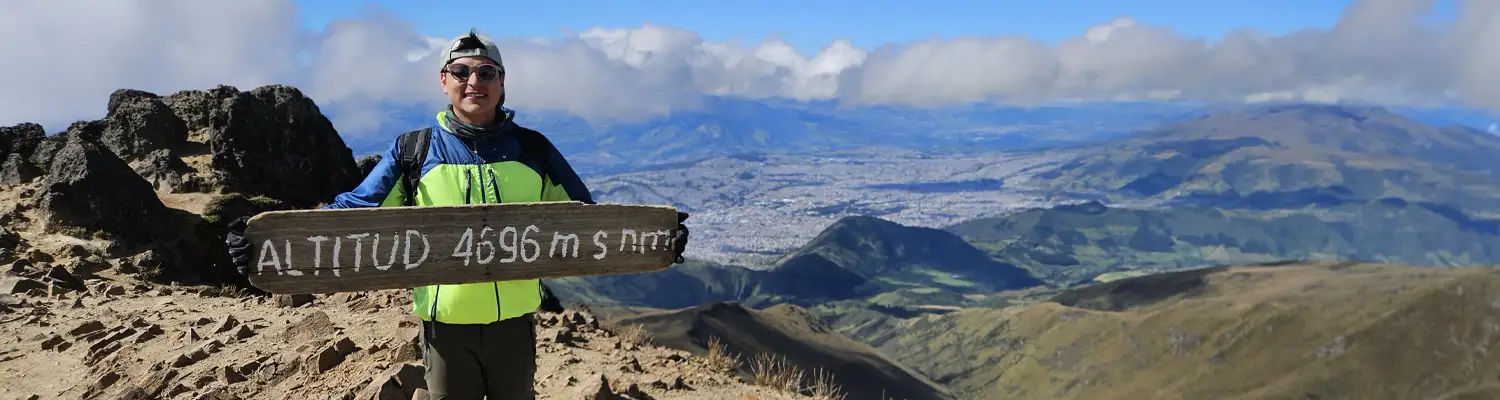
In July, I stood at nearly 18,700 feet (5,700 m) facing a decision: keep going or turn back. Cotopaxi — Ecuador’s most active volcano — revealed its true nature that morning: the altitude, the scree, the wind sapped my strength. It’s difficult if not impossible to fully prepare for the reality on the mountain.
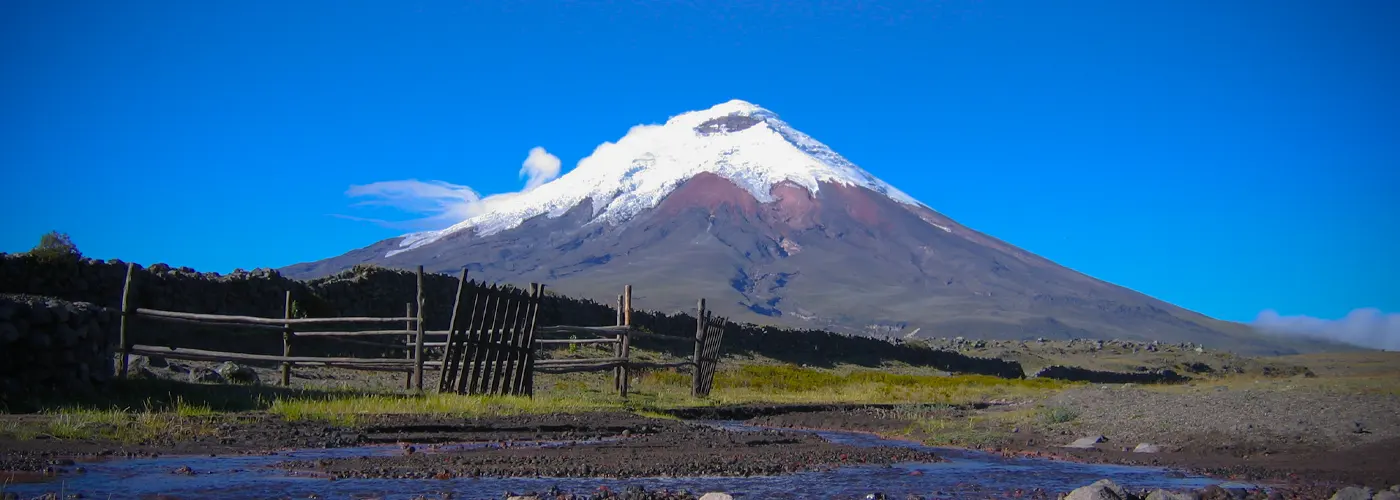
Climbing Cotopaxi means more than just ascending a peak. This 19,347-foot (5,897 m) volcano is one of the highest active volcanoes in the world. Its perfect, snow-covered conical shape appears almost surreal from Quito — a work of art created by nature. But the symmetrical aesthetic is deceiving. Climbing Cotopaxi is technically demanding and requires preparation, physical fitness, and absolute honesty about your own limits.
After two decades of experience in South America’s high mountains, I can say: Cotopaxi National Park offers one of Ecuador’s most thrilling high-altitude adventures. For this guide, I’ve combined the reality of an ascent with medical data, local insights, and brutal honesty.
What Makes Cotopaxi So Special?
Cotopaxi isn’t just very high — it’s active. Its last major eruption was in 2015, a reminder that this mountain is not a dead monument. Gases escape from its crater daily, visible as thin plumes of steam that can be seen from Quito when the weather cooperates.
Three factors make the volcano climb on Cotopaxi unique: First, the technical complexity. The summit climb traverses ice and firn — compacted, old snow that makes constant use of an ice axe essential. Second, the altitude: with a prominence of about 5,250 feet (1,600 m) above its base, the acclimatization challenge is considerable. Third, the isolation. Unlike more famous destinations such as Kilimanjaro or Aconcagua, Cotopaxi remains a goal for true mountaineers, not mass tourism.
Unlike well-known climbing destinations in Peru or Colombia, Cotopaxi National Park offers an intense, solitary experience. Most visitors are specialized mountaineers or thoroughly prepared adventurers — a difference immediately noticeable in the atmosphere.
Geographic Location: Cotopaxi in Ecuador's Andean Cordillera
Cotopaxi lies about 31 miles (50 km) southeast of Quito in the Ecuadorian Sierra, at the center of Cotopaxi National Park. At 19,347 feet (5,897 m) above sea level, it’s one of the highest active volcanoes on Earth. The nearest major city is Latacunga, slightly south of the park.
Cotopaxi National Park has several access points. The two main tourist entrances are the southern entrance Control Caspi via the Panamericana Sur, and the northern entrance Control Norte via Machachi and El Pedregal. Additionally, there’s the Ticatilín access via Mulaló, primarily used for routes on the volcano’s south side.
Geographically, Cotopaxi sits in the Inter-Andean Valley, following the north-south axis of the Ecuadorian Andes. From Quito, the Panamericana (Route E35) leads directly to the region. The park begins at about 11,800 feet (3,600 m), the park access road climbs steeply, and trails cross elevations between 12,500 feet (3,800 m) and nearly 19,350 feet (5,900 m) — an extreme altitude differential requiring thorough acclimatization.
Cotopaxi's Spiritual and Scientific Significance
For the Kichwa communities of Ecuador’s Sierra, Cotopaxi is far more than a tourist destination. The word “Cotopaxi” itself comes from Quechua “Cutuc Pacsi” — “Neck of the Moon” — a poetic designation expressing the spiritual connection of Andean peoples to this mountain. In Andean cosmovision, the volcano is a sacred place, an Apu — a protective mountain spirit.
Simultaneously, Cotopaxi fascinates scientists. Volcanologists monitor it intensively due to its regular activity. The 2015 eruptions — with an ash cloud reaching 26,250 feet (8,000 m) above the crater — showed that this mountain is very much alive. This combination of deep cultural significance and scientific relevance makes Cotopaxi so special.
Route, Altitude, and Difficulty: What Realistically Awaits You

Let me be honest: climbing Cotopaxi is demanding. The official route most mountaineers follow runs from Refugio Cotopaxi (at about 15,100 feet / 4,600 m) to the summit. The ascent involves nearly 4,265 feet (1,300 m) of elevation gain and technical glacier climbing over seven to nine hours, depending on climbers’ acclimatization and physical condition.
Most mountaineers need this time for the ascent from the refugio. Most importantly: this is not like climbing Chimborazo or Kilimanjaro. Cotopaxi absolutely requires ice climbing equipment — crampons, ice axe, climbing harness, and professional belay gear. Above 18,370 feet (5,600 m), the route becomes exponentially harder. The body functions differently. Oxygen levels drop to about 50% compared to sea level.
My experience confirmed that the first half of the climb is moderately steady — psychologically manageable. The second half — from about 17,060 feet (5,200 m) onward — becomes a challenge requiring willpower, acclimatization, and mental toughness. Wind on the ridge can become gusty. The ice can be hard as concrete.
Difficulty is classified differently by various sources, but honestly: this is intermediate-level technical alpinism — YDS Grade II–III or UIAA Grade II. The climb is not suitable for beginners and not realistically achievable without prior high-altitude experience.
Best Time to Visit Cotopaxi National Park
Cotopaxi can theoretically be climbed year-round — in theory. In practice, there are clear windows to prefer.
Dry Season (June to September): This is high season with more stable weather, clearer skies, and better conditions for glacier access. December to January offers similarly good conditions. During these months, the probability of intact snow cover and relatively stable weather remains high. July and August are popular — often with dozens of climbers per week on the route.
Rainy Season (October to December, March to May): Wet, uncertain, less reliable. Muddy trails at lower elevations, unstable glacier conditions in higher zones. Only experienced alpinists should plan an ascent during these months.
In July, the experience was challenging: brilliantly clear morning, but brutal ice conditions and freezing wind above 17,060 feet (5,200 m). Visibility was breathtaking — you could glimpse the Amazon lowlands from above. July also brings more visitors, sometimes meaning queues can form on the narrow ice ridge.
What You Must Bring: Essential Equipment
The layering principle isn’t optional — it’s survival-critical. On Cotopaxi, conditions can shift from sunny to storm with snowfall within 30 minutes. Thermal underwear (merino or synthetic), fleece mid-layer, and a high-quality waterproof outer shell are essential.
But specific equipment is also required: mountaineering boots with good soles, gaiters (to keep boots snow-free), gloves in multiple layers, a hat, and sunglasses for snow glare protection. The body needs time to adjust to altitude. A rapid ascent from sea level to 19,350 feet (5,900 m) isn’t just uncomfortable — it’s risky.
Technical gear — crampons, ice axe, climbing harness, helmet, carabiners, belay devices — is typically provided by the professional mountain guide. This saves you luggage weight on the flight. However, you should check equipment quality before the climb to avoid unpleasant surprises.
An Organized Tour to Climb Cotopaxi
As a professional, specialized mountaineering agency, we handle transport from Quito to the national park, offer acclimatizations (eight days with ascents of several other volcanoes is optimal), provide experienced mountain guides with extensive expertise and technical knowledge, and continuously monitor weather and snow conditions. The mountain guide can recognize risks, adjust route options in real time, and — most importantly — make the decision to turn back when conditions aren’t safe. A good mountain guide will only take you to the summit if conditions permit. That’s their job.
For Whom Is a Cotopaxi Climb NOT Suitable?
Cotopaxi is spectacular, but not for everyone. I advise against it if you:
- Arrive in Quito or Ecuador with very little acclimatization time. The altitude between 16,400 and 19,350 feet (5,000–5,900 m) demands everything from the body — without preparation, the risk of acute mountain sickness (AMS, HACE, or HAPE) is too high.
- Suffer from heart disease, severe asthma, or other cardiovascular conditions. The thin air at nearly 19,350 feet (5,900 m) places extraordinary stress on the heart and lungs.
- Have no experience with mountain ascents above 13,100 feet (4,000 m). Cotopaxi is not an easy climb — it requires technical glacier climbing.
- Have joint problems or back issues. Hours of strain on ice and snow in darkness demands everything from your musculoskeletal system.
- Haven’t built basic conditioning. At least three to four months of regular endurance training before the ascent isn’t a recommendation — it’s a prerequisite.
Cotopaxi Waits — But Only for Those Who Are Prepared
This article describes a mountain that demands respect and planning — not blind enthusiasm. Whether you take acclimatization seriously, choose the right month, and hire an experienced mountain guide: these are the decisions that determine summit success or necessary turnaround at 18,045 feet (5,500 m).
If you want to stand on Cotopaxi — with sufficient acclimatization time and professional support — we’re happy to plan it with you. We know the route, the stable weather windows, and the mountain guides we’ve trusted for years. Tell us your wishes and timeframe →
Since 2006, we’ve accompanied travelers through Ecuador’s high mountains — not bound to standard solutions, but with journeys tailored to your individual fitness and goals. Cotopaxi isn’t a mandatory summit. But if it’s to be your highlight, we’ll show you the way.
Depart. Discover. Wonder.